


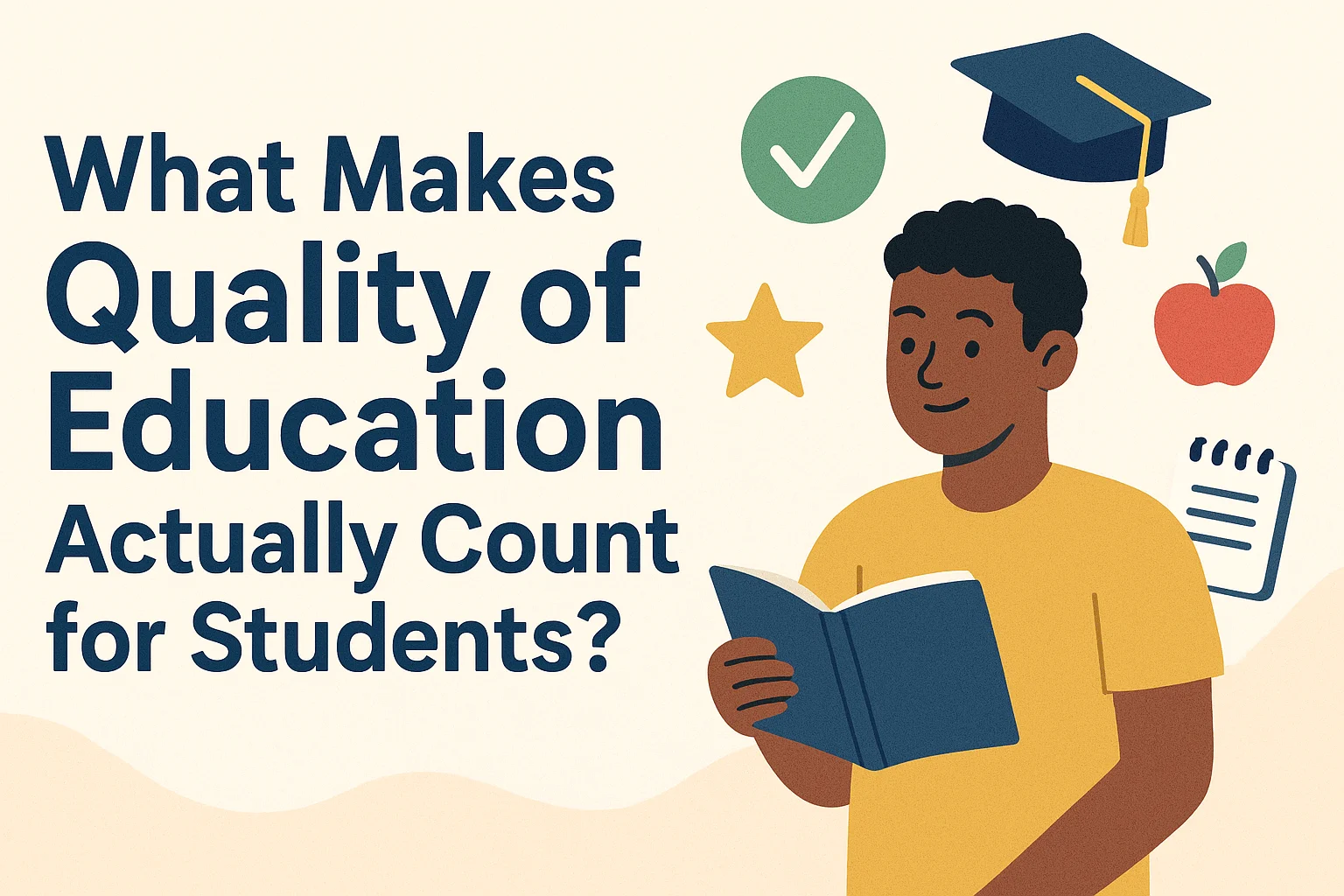
When we talk about the quality of education, it’s easy to think of exam scores, rankings, or even the size of a school campus. But education is much more than that. It is the foundation that shapes how a child thinks, adapts, and grows in the real world. True quality is measured not only in what students know but in how well they can apply that knowledge, make decisions, and thrive in life.
In this article, we’ll explore why the quality of education matters, what defines it, and how parents can recognize if a school is truly delivering it.
What Do We Mean by “Quality of Education”?
At its core, quality of education is about more than textbooks or classroom hours. It’s about whether schools are preparing children to handle the challenges of the present and the uncertainties of the future. A strong education system:
-
Equips students with academic skills while nurturing curiosity.
-
Builds social and emotional intelligence alongside subject knowledge.
-
Creates safe and inclusive spaces where children feel respected.
International studies, including those highlighted by UNESCO, stress that quality must be both inclusive and equitable. Education that only serves a fraction of students leaves the rest behind, which is why focusing on fairness is as important as focusing on academics.
Key Factors That Define Quality of Education

1. Strong Curriculum and Teaching
A great education always begins with a well-structured curriculum. But having a syllabus isn’t enough—it needs to stay updated with real-world changes, from technology to environmental issues. Students learn best when they see how lessons connect to life outside the classroom.
Equally important are teachers who know how to bring lessons alive. According to OECD education reports, students perform better when teachers use innovative and interactive strategies, instead of relying solely on rote learning. A dedicated teacher can make even the most difficult subjects engaging, inspiring a lifelong love for learning.
2. School Culture and Leadership
Beyond books and lessons, a school’s culture plays a huge role in shaping the quality of education. A healthy culture encourages respect, collaboration, and inclusivity. Children feel supported when their opinions matter and when they see diversity being celebrated in the classroom.
Strong leadership is another cornerstone. A principal or school management that values openness and innovation sets the tone for both staff and students. The National Association of State Boards of Education notes that leadership that prioritizes student-centered decision-making creates more effective schools overall.
3. Family and Community Involvement
Parents are a child’s first teachers, and when families remain actively engaged in their child’s education, the results are clear. Attending parent meetings, supporting schoolwork at home, and encouraging curiosity all contribute to stronger academic and emotional outcomes.
Research available through PubMed Central highlights that students thrive when schools maintain strong partnerships with families. This involvement not only boosts academic achievement but also helps schools identify and address individual needs more effectively.
4. Safe and Supportive Environments
Even the best curriculum cannot succeed in a stressful or unsafe setting. A safe, supportive school environment is crucial. This includes physical safety, emotional well-being, and clear policies against bullying.
When children feel secure and respected, their ability to focus and participate improves dramatically. It also builds resilience and confidence—two qualities that are essential for facing life beyond academics.
Why Quality of Education Should Be the Priority

The impact of education reaches far beyond school years. Here’s why focusing on quality makes all the difference:
-
Stronger academic foundation: Students don’t just memorize facts—they learn to think critically and solve problems.
-
Well-rounded growth: Beyond academics, schools nurture creativity, communication, and leadership skills.
-
Fair opportunities: A quality system ensures children from all backgrounds have equal access to success.
-
Stronger societies: As the World Bank points out, education is one of the most powerful tools for reducing inequality and promoting growth. Quality education builds citizens who drive innovation and contribute positively to their communities.
How Parents Can Recognize Quality in Schools
When choosing a school, parents can look for these signs of strong quality:
-
A balanced curriculum with academics, arts, and extracurriculars.
-
Teachers who are motivated, approachable, and continuously trained.
-
Leadership that communicates openly with families.
-
A school climate where students feel safe, valued, and encouraged.
-
Clear efforts to include parents as partners in the learning process.
The Every Student Succeeds Act (ESSA) framework emphasizes whole-child development, reminding us that real quality is about nurturing every aspect of a student—not just their test results.
FAQs About Quality of Education
Q1. Why is infrastructure linked to education quality?
Good infrastructure—libraries, labs, clean classrooms—creates an environment where students can concentrate better. According to UNESCO research, schools with adequate resources show higher attendance and improved outcomes.
Q2. How do I know if teaching quality is high?
Look for teachers who engage students with discussions, projects, and critical thinking exercises. Reports from OECD confirm that innovative teaching methods lead to deeper learning.
Q3. Does quality education always mean expensive education?
Not necessarily. Some public or community schools provide excellent learning outcomes because they focus on teacher training, family engagement, and equitable policies. The World Bank highlights examples of affordable, high-quality schooling models worldwide.
Bringing It All Together
Quality of education is not about chasing grades or flashy infrastructure. It is about building students who are curious, resilient, and prepared for the future. A good school balances academics with creativity, ensures safety and inclusion, and involves families every step of the way.
When schools, parents, and communities come together, education becomes more than a process—it becomes a force for growth and transformation.