

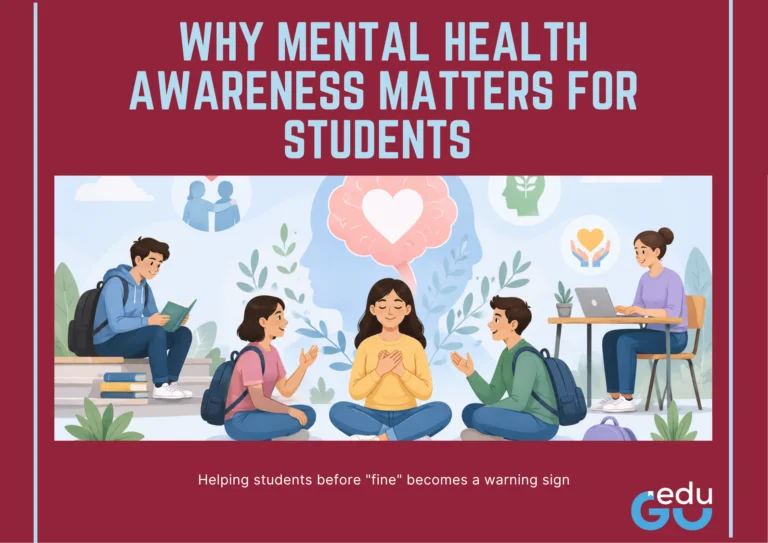



Education is no longer limited to memorizing facts and passing examinations. Modern classrooms now focus on helping students think critically, solve problems creatively, and build lifelong learning skills. Behind all these abilities lies Cognitive Development, an important process that strongly influences academic growth and classroom performance.
Students learn differently at every stage of life. Their ability to understand information, remember lessons, make decisions, and communicate ideas changes as the brain develops. When schools and parents support these mental growth stages properly, students become more confident learners and perform better academically.
From early childhood to teenage years, mental growth directly affects how students process information and respond to educational challenges. Understanding this connection helps teachers create better learning environments and helps parents support children more effectively at home.
Understanding Cognitive Development in Education

The term Cognitive Development refers to the way students grow mentally and improve their ability to think, reason, learn, and understand the world around them. It includes skills such as:
- Memory
- Attention span
- Problem-solving
- Language development
- Logical reasoning
- Decision-making
- Critical thinking
These abilities influence how effectively students absorb information in the classroom. A child with stronger thinking and processing skills usually finds it easier to understand lessons, complete assignments, and participate in discussions.
Educational psychologists have long emphasized that learning is connected to brain development. As students mature, their ability to process complex information also improves. This is why teaching methods should match the developmental stage of learners.
Why Cognitive Development Matters for Student Academic Success
Academic achievement is not only about studying harder. It is also about how efficiently the brain processes information. Mental growth helps students understand concepts faster and apply knowledge in practical situations.
Students with well-developed thinking abilities often show:
- Better concentration during lessons
- Improved memory retention
- Stronger communication skills
- Higher confidence levels
- Better classroom participation
- Faster problem-solving abilities
When these skills improve, students naturally become more capable learners. They are better prepared to handle assignments, exams, and collaborative learning activities.
Research in modern education also shows that emotional support, interactive teaching, and active learning environments contribute significantly to mental growth and academic performance.
Cognitive Development and Learning Abilities

Every classroom activity requires mental processing. Whether students are reading a chapter, solving mathematics problems, or participating in science experiments, their brains are constantly analyzing and organizing information.
Memory and Information Retention
Strong memory skills help students retain classroom lessons for longer periods. Children who can remember instructions, concepts, and examples usually perform better in tests and practical assignments.
Teachers can improve memory retention through:
- Visual learning methods
- Interactive activities
- Repetition techniques
- Real-life examples
- Group discussions
Students also benefit from healthy sleep routines and balanced nutrition, both of which support brain function.
Attention and Classroom Focus
Concentration is another essential factor in academic performance. Students who stay focused during lessons understand topics more clearly and complete tasks more efficiently.
Several factors affect attention span, including:
- Classroom environment
- Teaching style
- Screen time habits
- Emotional well-being
- Physical health
Schools that create engaging learning environments often see higher student participation and improved academic results.
Critical Thinking and Problem Solving
Modern education values analytical thinking more than rote memorization. Students are expected to evaluate information, ask questions, and solve problems independently.
Activities that strengthen critical thinking include:
- Project-based learning
- Debates and discussions
- Science experiments
- Creative writing
- Logical reasoning exercises
These activities encourage students to think independently and improve their decision-making skills.
The Role of Parents in Cognitive Development
Parents play a major role in supporting a child’s mental and academic growth. Learning does not stop after school hours. The home environment also influences how students think, communicate, and learn.
Simple daily habits can make a significant difference.
Encouraging Curiosity
Children naturally ask questions about the world around them. Encouraging curiosity helps improve reasoning and observation skills.
Parents can support curiosity by:
- Answering questions patiently
- Reading books together
- Encouraging creative activities
- Visiting educational places
- Limiting excessive passive screen time
Building Positive Communication
Open conversations help children develop language and emotional intelligence. Students who communicate confidently often participate more actively in classrooms.
Positive communication also helps children express doubts and seek academic help without fear.
Creating Healthy Study Routines
Consistent routines help students manage time effectively and reduce stress. Structured schedules improve discipline and concentration levels.
Healthy study habits include:
- Fixed homework hours
- Short study breaks
- Organized learning spaces
- Adequate sleep
- Balanced nutrition
These habits support long-term academic improvement and mental wellness.
How Schools Support Cognitive Development

Educational institutions play a direct role in shaping student learning abilities. Modern schools now focus on interactive teaching methods instead of traditional one-way instruction.
Student-centered learning environments encourage exploration, creativity, and teamwork.
Interactive Learning Methods
Activities that involve participation improve understanding and engagement.
Examples include:
- Smart classroom learning
- Educational games
- Hands-on experiments
- Collaborative group projects
- Digital learning tools
Interactive methods help students remain actively involved in the learning process.
Personalized Learning Approaches
Not every student learns at the same pace. Personalized teaching allows educators to adapt lessons according to individual learning needs.
This approach helps:
- Slow learners gain confidence
- Advanced learners stay challenged
- Students improve at their own pace
Teachers who understand different learning styles can create more effective classroom experiences.
Emotional and Social Learning
Academic success is closely connected to emotional well-being. Students who feel emotionally secure are more likely to participate confidently in school activities.
Schools can support emotional development through:
- Counseling support
- Peer interaction activities
- Leadership opportunities
- Stress management sessions
- Positive teacher-student relationships
Emotional balance helps students stay motivated and focused on academic goals.
Technology and Cognitive Development in Modern Education
Technology has transformed the learning experience for students across all age groups. Digital tools now make learning more interactive and accessible.
Educational technology can improve:
- Visual understanding
- Information access
- Research skills
- Creativity
- Independent learning
However, excessive screen exposure can negatively affect attention span and concentration. Balanced technology use is important for healthy mental growth.
Teachers and parents should encourage productive digital learning while maintaining healthy offline activities such as reading, sports, and creative play.
Common Challenges Affecting Student Cognitive Growth

Many students face challenges that can affect learning and academic performance.
Some common issues include:
- Academic pressure
- Lack of sleep
- Excessive screen time
- Poor nutrition
- Stress and anxiety
- Limited physical activity
These factors may reduce concentration, memory retention, and classroom participation.
Early support from parents and educators can help students overcome these difficulties and maintain healthy learning habits.
Strategies to Improve Cognitive Development in Students
Improving mental growth requires consistent support from both schools and families.
Effective strategies include:
- Encouraging active learning
- Promoting reading habits
- Supporting creative activities
- Providing emotional encouragement
- Maintaining healthy routines
- Encouraging social interaction
- Using practical learning experiences
Students learn best when education becomes engaging, supportive, and meaningful.
The Long-Term Impact on Academic and Personal Growth

Strong mental growth not only improves school performance but also prepares students for future success. Skills such as communication, reasoning, adaptability, and problem-solving remain valuable throughout life.
Students who develop strong learning abilities often become:
- More independent thinkers
- Better decision-makers
- Confident communicators
- Effective leaders
- Lifelong learners
Academic success is deeply connected to the ability to understand, adapt, and apply knowledge in different situations.
Conclusion
Student achievement is influenced by much more than textbooks and examinations. Mental growth shapes how learners think, understand, communicate, and solve problems throughout their educational journey. When parents, teachers, and schools work together to support learning abilities, students gain the confidence and skills needed for long-term success. Building supportive environments, encouraging curiosity, and promoting healthy learning habits can help every child reach their full academic potential.