

Education has changed faster in the last five years than in the previous fifty. Classrooms that once relied only on chalk and textbooks now compete with laptops, apps, and virtual lectures. As technology continues to reshape learning, the debate around Online vs Traditional Education has become more relevant than ever. For many parents and students, this shift raises a simple but important question—which method actually helps a learner grow more? Understanding the strengths and challenges of both approaches can help families choose the learning experience that best supports academic success and personal development.
This comparison looks beyond surface-level opinions. It draws on real classroom experience, current learning research, and how students themselves describe their academic progress. By the end, you’ll have a clear, practical answer based on facts rather than trends.
What Defines Traditional Education

Traditional education refers to the classroom-based system most of us grew up with — physical schools, fixed timetables, and face-to-face interaction with teachers and classmates.
This model has stood the test of time for good reason. It offers structure, discipline, and social development that are hard to replicate elsewhere.
Strengths of Traditional Learning
- Direct interaction with teachers allows instant doubt-clearing
- Peer learning builds communication and teamwork skills
- Fixed schedules create discipline and routine
- Practical labs, sports, and group activities support holistic growth
- Easier to monitor a child’s behavior and progress
Limitations of Traditional Learning
- Fixed pace may not suit slow or fast learners equally
- Commuting and rigid timing reduce flexibility
- Higher cost due to infrastructure, transport, and materials
- Limited access in remote or rural areas
What Defines Online Education
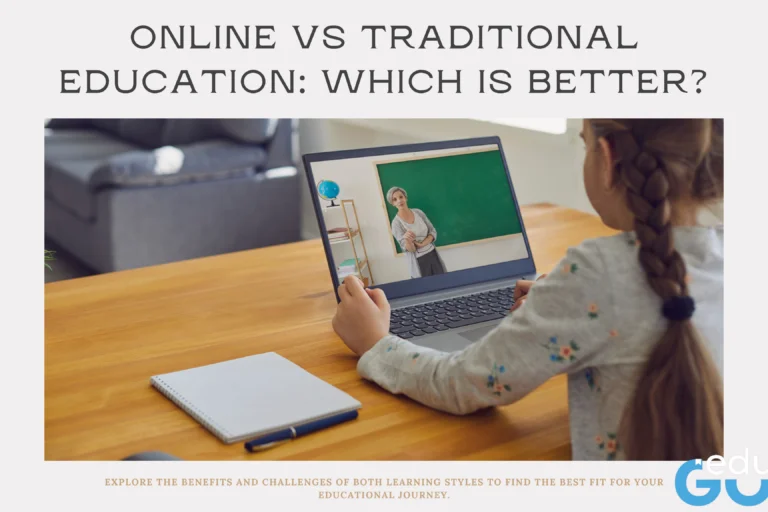
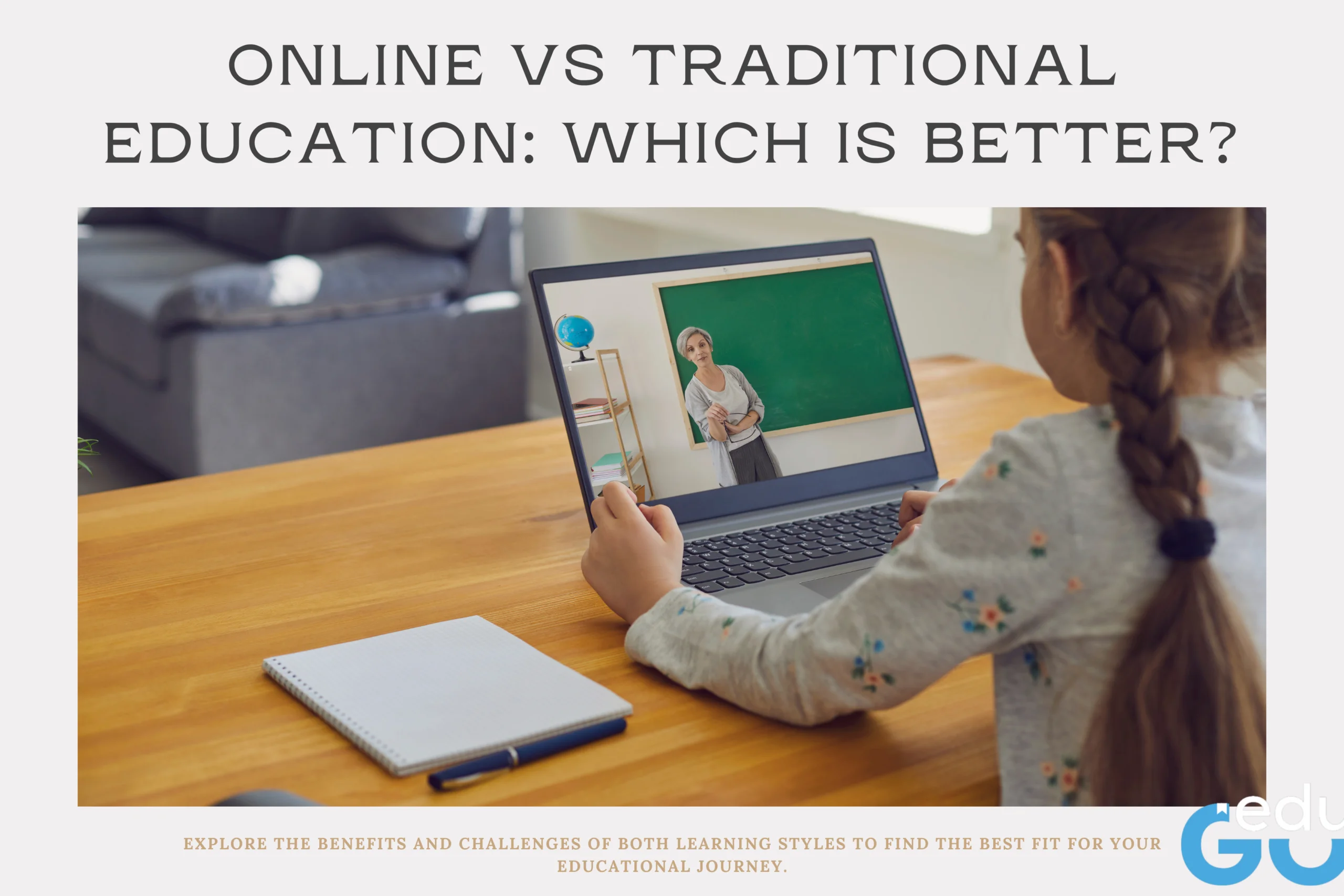
Online education uses digital platforms, recorded or live classes, and internet-based tools to deliver learning. It removes the boundaries of location and time, allowing students to learn from anywhere.
This format has grown rapidly, especially after global disruptions pushed schools and universities to adopt digital classrooms almost overnight.
Strengths of Online Learning
- Learn at your own pace, rewind and revise anytime
- Access to global instructors and resources
- Lower overall cost in many cases
- Comfortable learning environment, especially for introverted students
- Wide subject variety, including niche skills not taught in regular schools
Limitations of Online Learning
- Requires strong self-discipline and motivation
- Limited face-to-face social interaction
- Dependent on stable internet and devices
- Higher chances of distraction at home
Online vs Traditional Education: A Side-by-Side Look

When comparing online vs traditional education, the right choice often depends on the learner’s age, personality, and goals rather than one method being universally superior.
| Factor | Traditional Education | Online Education |
|---|---|---|
| Flexibility | Low | High |
| Social Interaction | Strong | Limited |
| Self-Discipline Needed | Moderate | High |
| Cost | Generally Higher | Often Lower |
| Access | Location-dependent | Available Anywhere |
| Learning Pace | Fixed | Personalized |
This table makes one thing clear — neither system wins in every category. Each serves different needs at different life stages.
Which One Actually Improves Learning Outcomes?
Academic performance depends less on the platform and more on engagement quality. A student attending physical classes but mentally disengaged learns less than one taking focused, structured online lessons.
Education researchers consistently point to three factors that matter more than format:
- Quality of instruction — a skilled teacher performs well in either setting
- Student motivation — self-driven learners thrive online; dependent learners may need classroom structure
- Subject type — practical subjects like science labs or sports favor traditional setups, while theory-heavy subjects adapt well to digital formats
This is why many schools now follow a blended approach rather than choosing one method exclusively.
Hybrid Learning: The Middle Path Many Schools Are Choosing

Instead of treating this as an either-or decision, many institutions now combine both systems. Hybrid learning keeps classroom interaction intact while adding digital flexibility for revision, assignments, and extra resources.
This middle path works particularly well because it offers:
- In-person mentorship along with digital convenience
- Recorded lectures for revision after physical classes
- Reduced pressure on attendance for minor health or travel issues
- Wider access to extra learning material beyond textbooks
For many parents wondering about online vs traditional education, hybrid models offer a practical compromise rather than forcing a strict choice.
How to Decide What’s Right for Your Child or Yourself
Rather than asking which system is “better” in general, ask these targeted questions:
- Does the learner need structure, or do they thrive with independence?
- Is the subject practical (needs hands-on learning) or theoretical?
- Is reliable internet access available at home?
- How important is social interaction and group activity right now?
- What is the long-term goal — board exams, skill development, or competitive exam prep?
Answering these honestly often makes the decision clearer than comparing the two systems in the abstract.
Conclusion
There is no universal winner in the online vs traditional education debate. Traditional education remains strong for discipline, social growth, and hands-on subjects. Online education wins on flexibility, accessibility, and personalized pacing.
The smartest approach for today’s students is not choosing sides, but using the strengths of both — attending structured classes while using digital tools for revision, extra practice, and self-paced learning. Education is shifting toward this blended future, and students who adapt to both formats will likely benefit the most in the long run.
FAQs
Q1. What is the main difference between Online vs Traditional Education?
Ans: The main difference between Online vs Traditional Education is that online learning takes place through digital platforms, while traditional education is conducted in physical classrooms with face-to-face teaching.
Q2. Which is better: Online vs Traditional Education for students?
Ans: Choosing between Online vs Traditional Education depends on a student’s learning style, goals, and preferences. Online education offers flexibility, while traditional education provides structured learning and direct interaction.
Q3. What are the advantages of Online vs Traditional Education?
Ans: Online vs Traditional Education both have unique benefits. Online learning offers convenience and flexibility, whereas traditional education encourages classroom participation, social skills, and hands-on learning.
Q4. Is Online vs Traditional Education suitable for all age groups?
Ans: Yes, Online vs Traditional Education can benefit learners of all ages. Younger students often thrive in traditional classrooms, while older students and professionals may prefer the flexibility of online learning.
Q5. How can parents choose between Online vs Traditional Education?
Ans: Parents should compare Online vs Traditional Education based on their child’s learning needs, academic goals, access to technology, social development, and preferred learning environment before making a decision.