

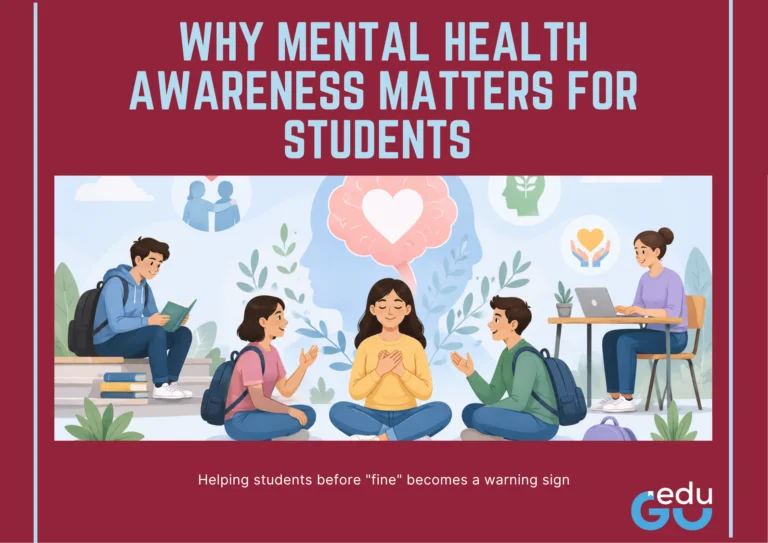


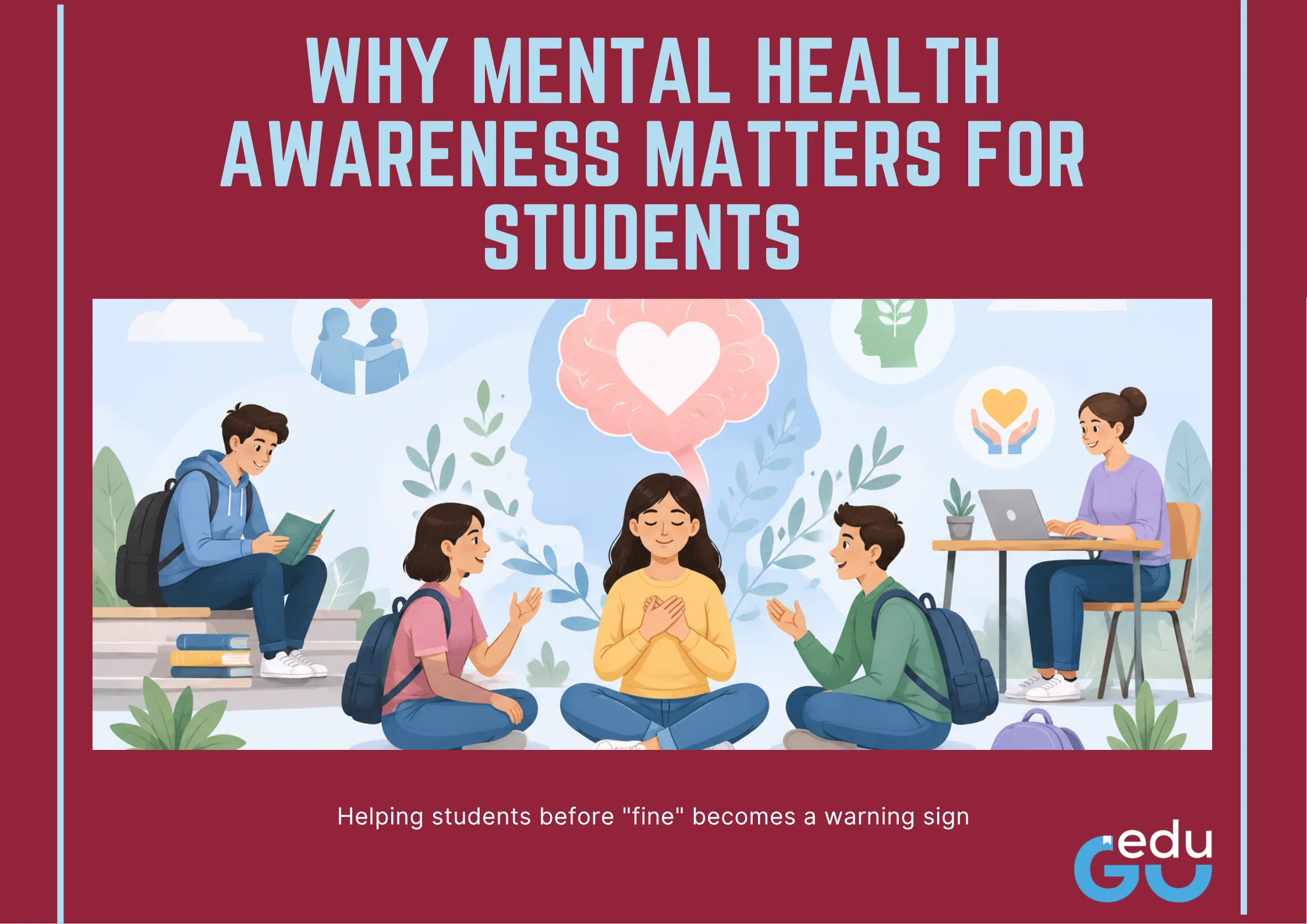
In today’s fast-changing world, understanding emotions is just as valuable as learning mathematics, science, or languages
What Is Mental Health Awareness?

Mental Health Awareness means understanding emotional, psychological, and social well-being while recognizing the importance of seeking support when needed. It helps students identify their emotions, understand stress, and develop healthy coping strategies.
Awareness also reduces misconceptions about mental health. Instead of viewing emotional struggles as weaknesses, students learn that everyone faces challenges and that support is available.
Why Mental Health Awareness Is Important for Students
Student life brings many exciting opportunities, but it also introduces responsibilities and expectations. Mental Health Awareness helps students handle these situations in healthier ways by teaching them to manage stress, understand their emotions, and seek support when needed. This awareness builds confidence, resilience, and a positive approach to everyday challenges.
Improves Academic Performance
Students who feel emotionally balanced often find it easier to:
- Concentrate during lessons
- Complete assignments on time
- Remember information
- Participate confidently in class
- Stay motivated toward their goals
A healthy mind creates better learning conditions.
Builds Emotional Strength
Every student faces setbacks at some point. Good emotional health teaches them how to:
- Accept mistakes
- Learn from failures
- Stay positive during challenges
- Adapt to change
- Keep moving forward with confidence
These qualities remain valuable throughout life.
Encourages Healthy Relationships
Mental well-being improves communication and empathy. Students become better at:
- Respecting others
- Resolving conflicts peacefully
- Working in teams
- Building strong friendships
- Supporting classmates
Positive relationships create a happier school environment.
Reduces Stress and Anxiety
School schedules can become busy with assignments, projects, examinations, and extracurricular activities. Learning healthy coping skills helps students manage pressure without becoming overwhelmed.
Simple practices such as time management, exercise, proper sleep, and talking openly with trusted adults can make a significant difference
Common Mental Health Challenges Students May Face

Every child is different, but many students experience similar emotional struggles during their academic journey.
Academic Pressure
High expectations may create fear of failure, affecting confidence and motivation.
Social Challenges
Friendships, peer pressure, bullying, and social media comparisons can influence emotional well-being.
Family Changes
Events such as moving homes, family conflicts, or personal loss may affect a student’s emotional balance.
Exam Stress
Preparing for important tests often increases anxiety if students do not maintain healthy study habits.
Recognizing these situations early allows families and schools to provide timely support.
Signs That a Student May Need Extra Support
Parents and teachers should pay attention to noticeable changes in behavior rather than isolated incidents.
Some common signs include:
- Sudden drop in academic performance
- Frequent sadness or mood swings
- Difficulty concentrating
- Loss of interest in favorite activities
- Changes in eating or sleeping habits
- Increased irritability
- Social withdrawal
- Constant fatigue
- Low self-confidence
These signs do not always indicate a serious condition, but they deserve attention and understanding.
How Schools Can Promote Mental Health Awareness

Schools play an important role in creating emotionally safe learning environments.
Encourage Open Conversations
Students should feel comfortable discussing emotions without fear of judgment.
Train Teachers
Teachers who understand emotional well-being can identify early warning signs and provide appropriate guidance.
Include Life Skills Education
Lessons on emotional intelligence, resilience, communication, and stress management prepare students for real-life situations.
Create Safe Spaces
Counseling rooms, wellness programs, and student support groups help children express themselves openly.
Celebrate Individual Growth
Recognizing effort, kindness, creativity, and improvement—not only high grades—builds confidence and self-esteem.
How Parents Can Support Their Children
Parents have one of the strongest influences on a child’s emotional development.
They can help by:
- Listening without interrupting
- Spending quality time together
- Encouraging healthy daily routines
- Limiting excessive screen time
- Supporting hobbies and physical activity
- Praising effort instead of perfection
- Talking openly about emotions
- Seeking professional help when necessary
A supportive home environment gives students confidence to overcome challenges.
Healthy Habits That Support Student Well-Being
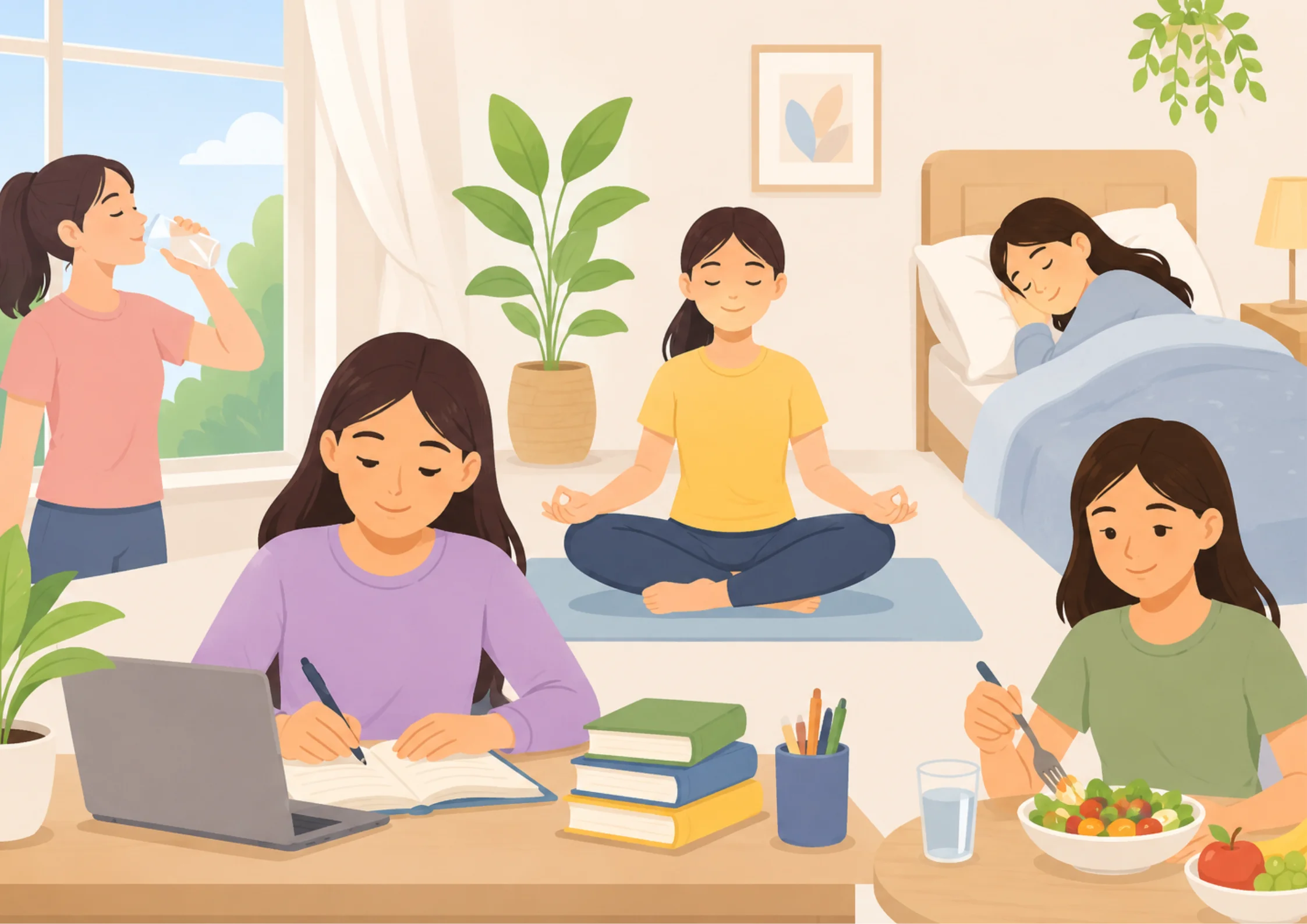
Small daily habits can greatly improve emotional balance.
Get Enough Sleep
Proper rest improves memory, concentration, and emotional control.
Stay Physically Active
Regular exercise releases natural mood-boosting chemicals that reduce stress.
Eat Balanced Meals
Nutritious food provides the energy needed for learning and emotional stability.
Take Study Breaks
Short breaks improve focus and reduce mental fatigue.
Practice Mindfulness
Deep breathing, meditation, or quiet reflection helps students manage difficult emotions.
Maintain Social Connections
Healthy friendships provide encouragement and emotional support during stressful times.
Breaking the Stigma Around Mental Health
Many students hesitate to ask for help because they worry about being judged. This stigma often prevents early support.
Schools and families can reduce stigma by:
- Using respectful language
- Encouraging empathy
- Sharing reliable information
- Talking openly about emotions
- Treating emotional health with the same importance as physical health
When seeking help becomes normal, students feel safer and more confident.
Long-Term Benefits of Mental Health Awareness
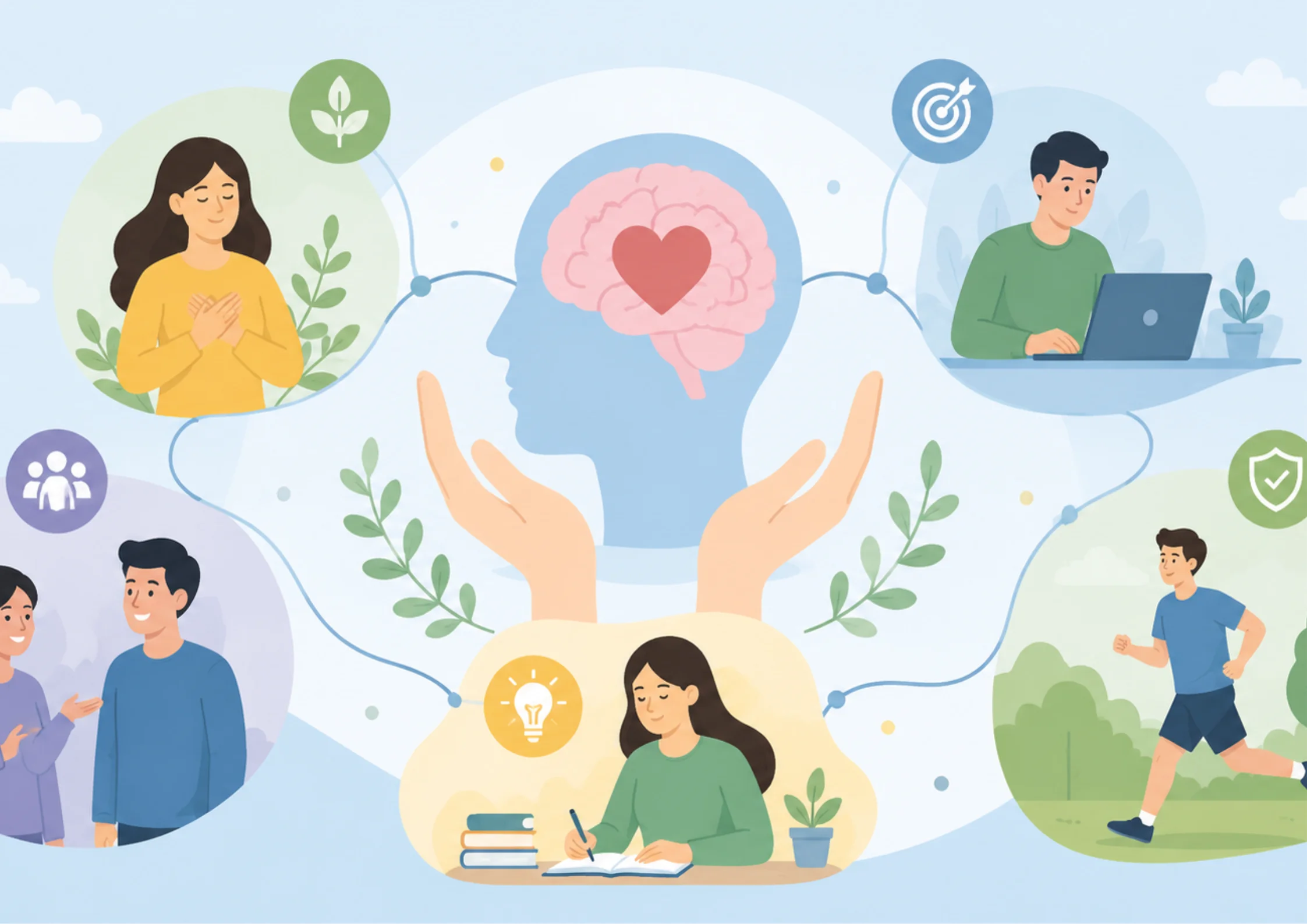
Students who understand emotional well-being often develop valuable lifelong skills.
These include:
- Better decision-making
- Stronger resilience
- Higher self-confidence
- Improved communication
- Better stress management
- Healthier relationships
- Increased academic motivation
- Greater overall happiness
These benefits extend well beyond the classroom into higher education, careers, and personal life.
Conclusion
Education is about more than textbooks and examinations. Mental Health Awareness plays a vital role in helping students feel emotionally safe, supported, and understood. By encouraging open conversations, building supportive school communities, and promoting healthy habits at home, we prepare young people for success in every area of life. Prioritizing mental well-being today helps students grow into confident, resilient, and responsible individuals tomorrow.
Prioritizing Mental Health Awareness helps students develop confidence, resilience, and emotional strength while creating learning environments where every child has the opportunity to reach their full potential. Investing in mental well-being today builds healthier, happier, and more successful generations tomorrow.
Frequently Asked Questions (FAQs)
Q1. Why is Mental Health Awareness important for students?
Ans: It helps students understand their emotions, manage stress, build resilience, and seek support when needed, leading to better academic and personal growth.
Q2. What are common mental health challenges students face?
Ans: Students may experience academic pressure, exam stress, anxiety, social challenges, bullying, and family-related concerns.
Q3. How can schools support student mental health?
Ans: Schools can provide counseling services, promote open discussions, teach life skills, train teachers, and create safe learning environments.
Q4. How can parents improve their child’s emotional well-being?
Ans: Parents can listen without judgment, encourage healthy routines, spend quality time together, and seek professional support when necessary.
Q5. What daily habits improve students’ mental well-being?
Ans: Getting enough sleep, exercising regularly, eating nutritious meals, practicing mindfulness, taking study breaks, and maintaining positive friendships all support better mental health.