

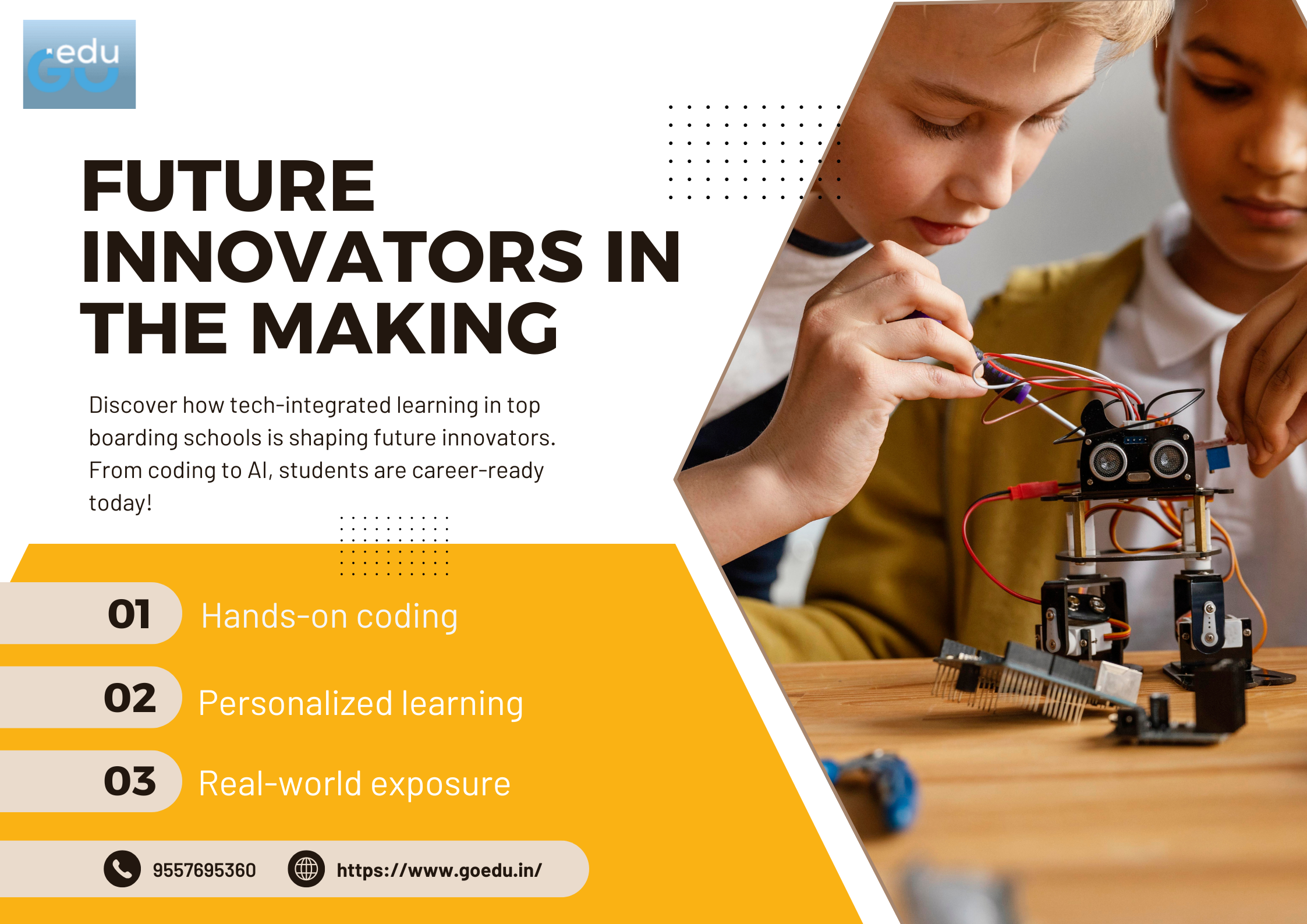
Learning is in the midst of a gigantic revolution, and at the core of it lies tech-integrated learning — a new trend that’s not just about smart boards and computer labs. Schools in India, particularly forward-looking ones such as CBSE boarding schools in India, now integrate academics with technology to equip students with the skills needed for jobs not even conceived a decade ago.
Let’s take a look at how this is done and why it’s important to your child’s future.
Why Technology in Schools Is More Than a Trend

We’re in a digital-first age. Everything, from the way we shop to the way we communicate, is technology-driven. So, of course, education had to adapt as well.
But this isn’t about putting tablets in kids’ hands. It’s about designing learning environments in which technology enhances comprehension, stimulates creativity, and develops real-world skills.
Here’s why learning with technology matters:
- Future-ready abilities: Consider coding, robotics, data science, and even AI.
- Personalized learning: AI tutors are among the technologies that aid in accommodating various learning speeds and learning styles.
- Enhanced Engagement: Interactive content keeps students engaged — bye-bye, sleepy classroom.
- Global exposure: Virtual exchanges and online collaborations bring students around the globe together.
This shift is especially clear in top institutions like boarding schools in Dehradun and modern campuses in cities like Bangalore. These schools are investing heavily in ed-tech to help students thrive in the real world.
Inside Tech-Integrated Classrooms: What’s Actually Happening
Let’s take a close look at how this change manifests in real classrooms.
1. Smart Classrooms and Interactive Learning
Those days of chalk and duster are over. Today, classrooms have smart boards, AR/VR material, and cloud-based collaboration software.
Teachers utilize tools like Google Classroom or Microsoft Teams to assign tasks, offer feedback, and even conduct virtual chemistry experiments. In certain CBSE boarding schools in India, students are using tablets or laptops during classes — not only for notes, but for simulation, coding games, and creative work.
2. Coding Is No Longer Optional
If reading, writing, and math were the ‘essentials’ of the past, coding is now joining that list.
Schools are introducing programming as early as Grade 3. Kids learn to create apps, design websites, and even build simple AI models. This hands-on learning is part of the curriculum in several boys boarding schools in Dehradun, preparing students for careers in tech, business, and beyond.
3. STEM Labs and Innovation Centers
Several forward-thinking schools are establishing special rooms for robotics education, 3D printing, electronics, and engineering related activities. They’re not science labs — they’re innovation centers.Kids hack, test, and construct things — from quadcopters to electric vehicles. It’s this level of creative liberty that develops problem-solving capabilities and an interest in innovation.
Some boarding schools for girls in Bangalore even collaborate with technology firms to provide mentorships and workshops, providing students with exposure to the real world of tech jobs.
4. Artificial Intelligence and Personalized Learning Platforms
Each child has a different learning style. With the assistance of AI tools, schools are personalizing education for every student.
Platforms driven by AI monitor a student’s learning style and modify the content to match their speed. Having struggles with math? More practice questions are provided by the tool. Did you master the idea? You progress more quickly.
Schools such as CBSE boarding schools in India are adopting this approach to ensure that no child falls behind — particularly in boarding environments where students stay and study full-time.
Boarding Schools Are Pioneering EdTech

You might be surprised, but boarding schools in Dehradun and the rest of India are usually leaders when it comes to education innovation.
Why? Because these schools possess the infrastructure, full-day timetables, and campus facilities to embrace Tech effortlessly.
Here’s why they lead the pack:
- 24/7 Access to Technology
In contrast to day schools, boarding schools provide a 24/7 environment for learning. Students enjoy access to tech labs, internet libraries, and smart devices outside school hours — a lot of time to learn and discover.
- Overall Development Through Tech
It’s not all about academics. Students apply technology to extracurriculars as well — from video editing for media clubs to developing apps for social causes. This provides a balanced mix of Tech and creativity.
- Career Counseling with a Technological Twist
Best boarding schools in Bangalore now utilize AI tools to provide career guidance. Depending on a student’s abilities, interests, and grades, these tools recommend perfect career options and the abilities required to take them up.
It’s an individualized map that encourages students to think outside the constraints of conventional job descriptions.
What Future Careers Are Schools Actually Preparing Kids For?

We’re not just talking about making your child “good at tech.” We’re talking about opening doors to careers that are growing fast.
Thanks to tech-integrated learning, students are gaining early exposure to fields like:
- Software development
- Robotics and automation
- Data Science
- Cybersecurity
- Game design
- Space tech and AI research
- Environmental engineering
Some schools even let students intern with startups or take online college-level courses alongside regular classes.
It’s not about simply getting good grades anymore — it’s about creating a future-proof profile.
Conclusion:
Technology-infused learning isn’t the future now — it’s now. And as a parent, it’s fair to ask whether your child’s school is really setting them up for what comes next.
Whether it is a boarding school affiliated with CBSE in India, a contemporary girls boarding school in Bangalore, or a well-known boys boarding school , seek indications that the school is employing technology not only as a tool — but as a bridge to future careers.
Because let’s be honest: the careers of the future will not simply demand degrees — but skills. Those skills are in the making today in schools where education and innovation walk hand in hand.