



Education Builds Leadership Qualities
Every parent wishes to see their child grow into a confident leader—a person who makes good choices, resolves problems, and inspires others. Leadership, however, does not develop overnight; it is cultivated step by step. That is why Education Builds Leadership Qualities in ways that extend far beyond the classroom.
In today’s world, grades alone are not enough. Leadership, responsibility, and communication are just as important as academics. Schools, parents, and real-life experiences work together to prepare children for a future where Education Builds Leadership Qualities that are as valuable as intelligence.

When students learn leadership from a young age, they don’t just become better learners—they become better human beings. Through education, students develop skills that help them:
-
Make informed choices in school and life
-
Respect diverse perspectives and collaborate with peers
-
Solve problems effectively with determination
-
Take responsibility for their actions and commitments
According to Harvard Graduate School of Education, leadership development goes hand in hand with academic achievement and emotional intelligence—two skills essential in today’s competitive world. This is why Education Builds Leadership Qualities that go beyond grades.
How Education Builds Leadership Qualities
1. Encouraging Teamwork
Group activities, class discussions, and peer learning teach students to work together. They learn how to listen, value different opinions, and contribute toward a shared goal.
2. Promoting Decision-Making
From choosing project themes to solving classroom challenges, students make decisions every day. Education gives them safe spaces to practice decision-making, proving once again how Education Builds Leadership Qualities in real-world settings.
3. Developing Communication Skills
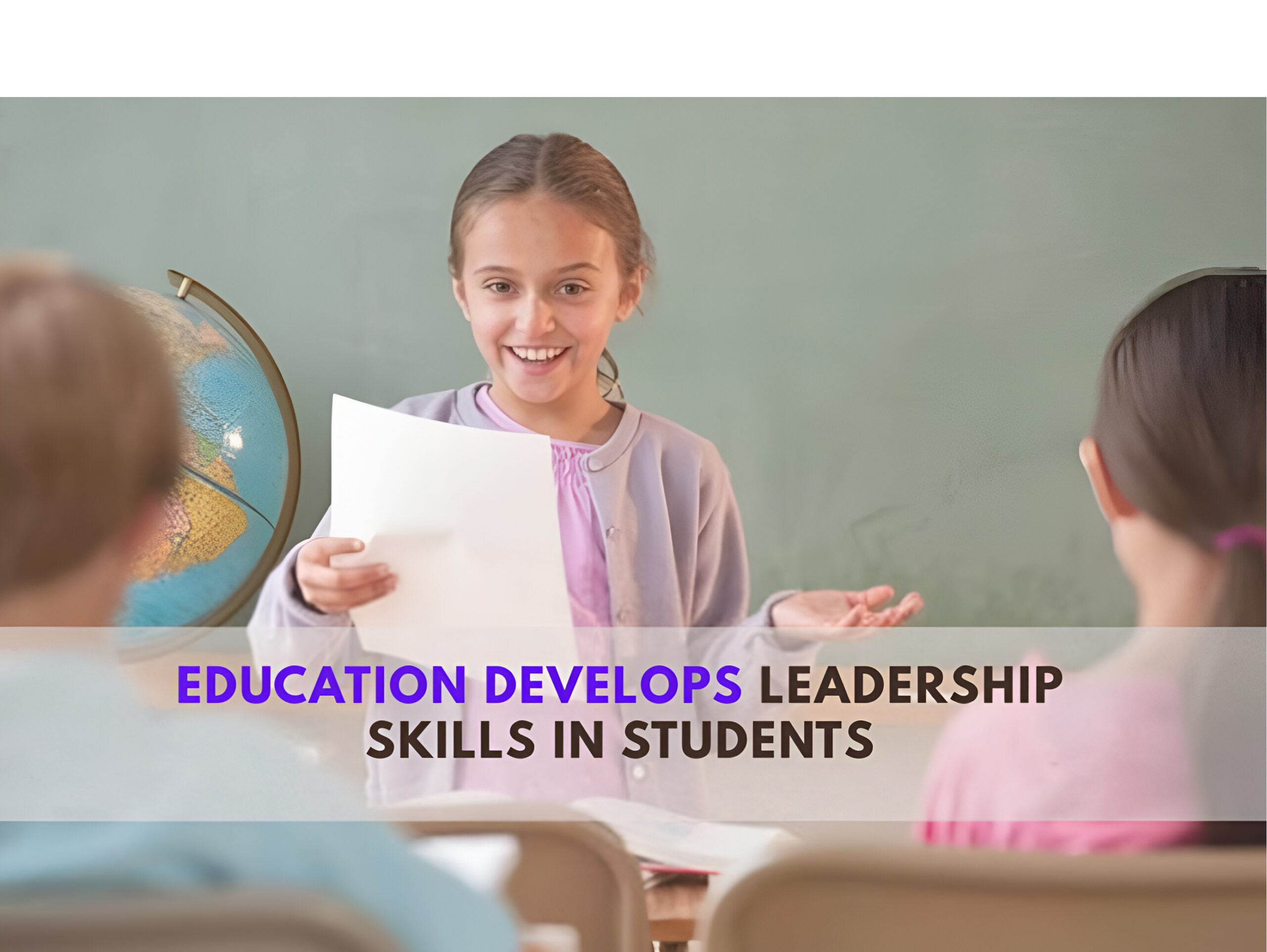
Presentations, debates, and written assignments provide opportunities to communicate effectively. Since leadership thrives on communication, schools offer countless ways to strengthen this skill.
For deeper insights on how communication empowers leadership, see Forbes on effective leadership communication.
4. Learning Responsibility
Deadlines, projects, and school duties teach accountability. Students discover that leadership is not only about guiding others but also about managing their own responsibilities.
5. Building Confidence
Education allows students to try, fail, and try again. These small experiences in perseverance shape confidence—the foundation of leadership. This is another example of how Education Builds Leadership Qualities gradually in children.
The Role of Extracurricular Activities
Academics sharpen the mind, but extracurricular activities shape personality. Sports, cultural events, debates, and drama help students to:
-
Handle both victory and defeat with dignity
-
Lead and motivate peers under pressure
-
Inspire others through personal example
-
Develop discipline and focus
In these settings, students realize that Education Builds Leadership Qualities beyond textbooks, preparing them for real-world challenges. You can explore more on this through Edutopia’s guide on extracurricular learning.
How Parents Can Support Leadership Development

Schools contribute significantly, but parents also play a crucial role in shaping leaders. Parents can:
-
Encourage participation in school clubs, service activities, or volunteering
-
Offer independence by allowing children to make small decisions at home
-
Recognize leadership efforts, such as organizing chores or helping siblings
-
Model leadership at home through empathy, responsibility, and problem-solving
-
Guide through mistakes, teaching children lessons without discouragement
When schools and parents collaborate, Education Builds Leadership Qualities naturally in students. A useful resource for parents is Parenting for Leadership, which shares practical strategies to nurture young leaders.
Looking Ahead
In the bigger picture, Education Builds Leadership Qualities by balancing academics with personal growth. Beyond exams, it equips children with confidence, responsibility, and the ability to inspire others.
For parents and teachers, the mission is clear: don’t just prepare students for grades—prepare them for leadership. After all, today’s students are tomorrow’s leaders, and investing in their leadership journey today is the greatest gift we can give them.
Quick Q&A: Leadership and Education
Q1: Can leadership really be learned through education?
Yes. Structured opportunities like group work, projects, and assignments show how Education Builds Leadership Qualities step by step.
Q2: Are leadership qualities useful outside school?
Absolutely. Skills like teamwork, communication, and decision-making are vital for higher education, careers, and personal relationships.
Q3: Do only high-performing students become leaders?
Not at all. Leadership is not about grades—it’s about qualities such as confidence, responsibility, and collaboration, which any student can build.
Q4: What role do teachers play in leadership development?
Teachers are mentors. They encourage student voices, assign responsibilities, and guide children toward taking initiative.