

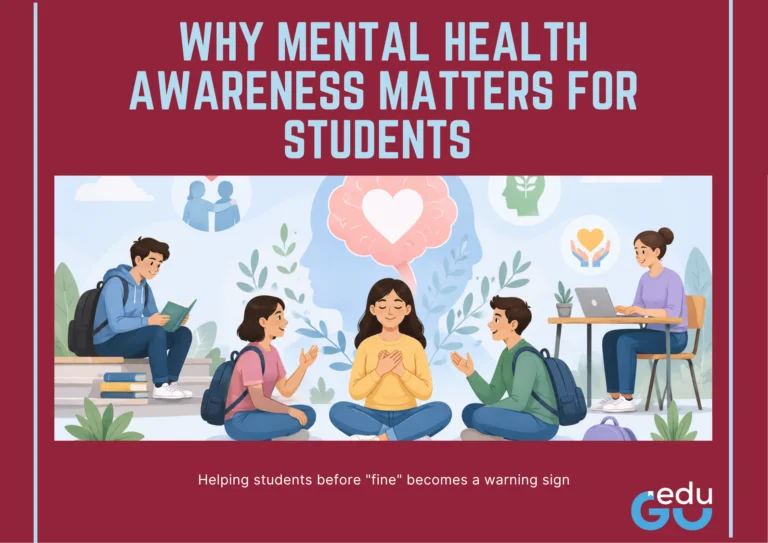


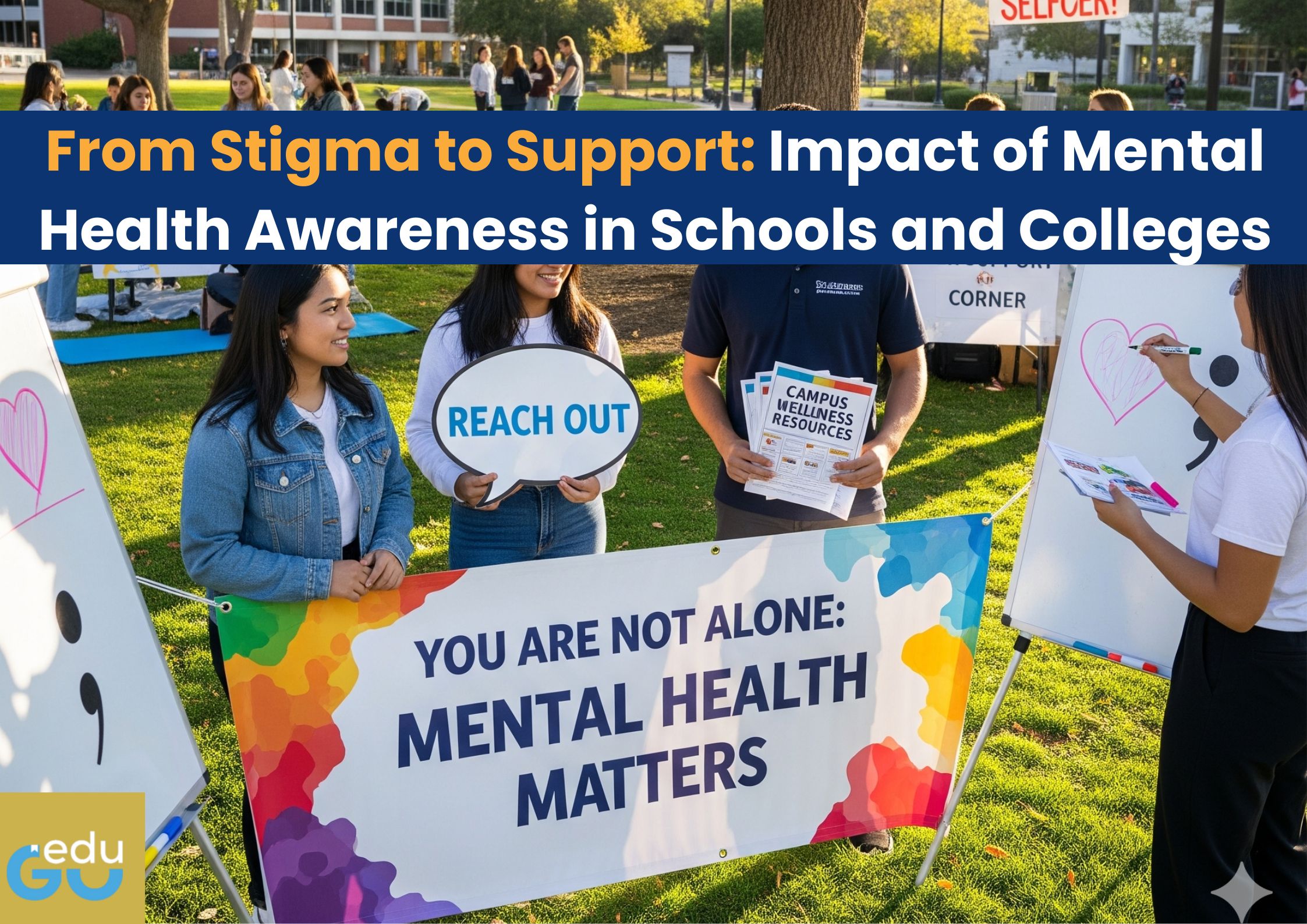
Mental health awareness in schools and colleges is a major issue now more than ever, and a vital part of developing safe, inclusive, and effective learning environments for students. During forms of youth, students often face academic challenges, peer pressure and personal matters during crucial moments of their growth, presenting multiple emotional hurdles that can negatively impact their psychological well-being and academic achievement.
Schools and colleges can build a culture of understanding, conversation, resources, and trained staff to respond to early signs of difficulties so to help create a shift in perception away from a culture of silence.
Understanding Mental Health Awareness in Educational Settings
Awareness of mental health is knowledge, attitudes, and behaviors used to promote emotional well-being and reduce the stigma related to mental health difficulties. This means educating students and staff in schools and colleges about mental health, and providing accessible counseling services in schools as well as a culture that supports and promotes mental health.
In the past, mental health was often discussed only in ignorance or during a crisis. Fortunately, many progressive institutions now recognize the importance of child psychology in supporting students’ well-being. By understanding early signs and providing appropriate guidance, schools and colleges can help students thrive academically and emotionally, preventing long-term issues before they arise.
The Stigma Problem: Barriers to Support

Although awareness is increasing, stigma is still a major barrier. Many students are overwhelmed by the prospect of the stigma that could result from talking openly about their struggles and instead fear being judged, labelled or misunderstood. The stigma can be further exacerbated by:
- Cultural norms that discourage talking about feelings.
- Social pressures to act “strong” or to not be affected.
- Systems’ lack of mental health policies and pathways for support.
The reality is, students are suffering silently, ultimately resulting in poor grades, absences, in severe cases, mental health incidents. Reducing mental health stigma is an important first step in creating supportive academic environments.
From Stigma to Support: Awareness Campaigns
Awareness campaigns in schools and colleges can create a shift in attitudes and behaviors. Things that could be included are:
- Workshops and seminars on stress management, resilience, and emotional intelligence.
- Peer-led programs where trained students are mental health ambassadors.
- Schools’ counselling programs that provide anonymous and non-judgmental support.
- College wellness programs that talk about mental health as part of orientation and student life events etc.
National and global awareness campaigns, such as the World Mental Health Day can be adapted for educational settings to spark conversations and encourage participation.
Positive Outcomes of Mental Health Awareness

Academic Benefits
Students are more likely to attend classes, invest their effort in their learning, and perform better academically if they know that they are supported. When anxiety and depression are minimized, concentration, memory, and problem-solving are improved.
Emotional Benefits
Awareness allows for self-acceptance and resilience. Students Adapting coping strategies, emotional regulation, and learning when to early seek support are valuable skills for students for years beyond graduation.
Social Benefits
An open culture enhances peer interactions. It will encourage students to be more empathetic, inclusive, and willing to support one another to create a sense of belonging and a healthier campus community.
Case Studies & Success Stories
Example 1: A High School Peer Support Program
A public high school introduces a peer counselling initiative where trained student offered confidential listening sessions. Within a year, the school reported a 30% increase in students seeking help and a noticeable decline in bullying incidents.
Example 2: University Wellness Week
A large university launched an annual “Wellness Week” featuring workshops, yoga sessions, and mental health screenings. Surveys showed a 40% increase in awareness of available counseling services and a significant reduction in stigma-related attitudes.
These examples highlight how targeted programs can create measurable improvements in student mental health and campus culture.
Ways for Schools and Colleges to Improve Awareness
1. Build Mental Health into the Curriculum
Provide Health or Life Skills classes that include topics around emotional literacy, stress management, and mindfulness.
2. Train Staff
Educators should be trained to notice signs of distress and knowledgeable enough to refer students accordingly.
3. Build Safe Spaces
Have rooms or areas where students can find sanctuary, meditate, or be able to privately speak with a counselor.
4. Use Technology
Have apps, online portals, and social media to share resources, promote events, and connect students with other support options.
5. Communicate with Families
Have workshops for the family to understand student mental health needs and support that understanding.
Overcoming Challenges in Implementation

There are several difficulties that educational institutions encounter while trying to implement mental health programs for their students. These include
financial difficulties (e. g., hiring a counselor or funding the program), opposition from people who do not think mental health education is important, and concerns about cultural sensitivity in schools with students from many different backgrounds.
However, this does not mean such obstacles are insurmountable: A range of solutions is available, including seeking grants and forming partnerships with non-governmental organizations (NGOs), all of which can help fund these vital services.
Long-Term Effects on Society
There are many advantages to promoting mental health in schools and colleges, and these don’t just help the students while they’re still studying. When young people learn how to look after their mental health, they grow up to be adults who can bounce back from difficulties (resilience), who understand and care about other people (empathy), and who are able to make a positive contribution to society.
Fewer cases of mental illness mean less pressure on health services– so this could be a way of reducing healthcare costs. And if everyone in a community values mental well-being just as much as they do physical health, then that community will be a happier place for all its members.
Conclusion & Call to Action
The first step in changing the way people think about mental health is awareness. Schools and colleges can be places where students feel safe asking for help if they need it, where their peers can support them, and where teachers know how to respond.
But to make this happen, we need more than just occasional conversations or workshops about mental health – we need to make it a regular part of the curriculum.
If you’re an educator, student or policymaker, you have an important role to play in helping us achieve this goal. By working together towards a common goal of promoting mental health awareness in schools and colleges, we can create environments that support young people’s wellbeing and help them reach their full potential.
Frequently Asked Questions (FAQ)
1. What is mental health awareness in schools and colleges?
This refers to different efforts that are made within educational institutions to promote knowledge about how people’s feelings are, fight against the devaluation of those with mental issues, & motivate pupils to ask for support when necessary.
It comprises including issues related with mental health in educational content, providing services of psychologists or social workers at schools as well as creating friendly environment on campus.
2. Why is mental health awareness important for students?
The purpose of increasing awareness on mental health issues among students is not only to enable them identify signs related with stress, anxiety, or even early depression so they can get support in time, but also.
By doing this there will be better performance academically, increased strength on individuals (resilience), as well as creating safer & inclusive environment for all learners!
3. How does mental health awareness reduce stigma?
By running these kinds of campaigns against stigmatization it is possible to turn around certain viewpoints whereby people start seeing it differently.
All these activities work towards making help-seeking behavior for mental health issues perceived as normal & an indication that one is strong enough!
4. What role do teachers and staff play in promoting student mental health?
Educators & other personnel have a big role because they interact with students very closely from day one up to when they graduate– hence spotting anything unusual may come easily at such early stages.
Once given appropriate training, they can detect these signs early enough; offer some form of preliminary assistance & refer students for counseling in school or wellness services at university level.