

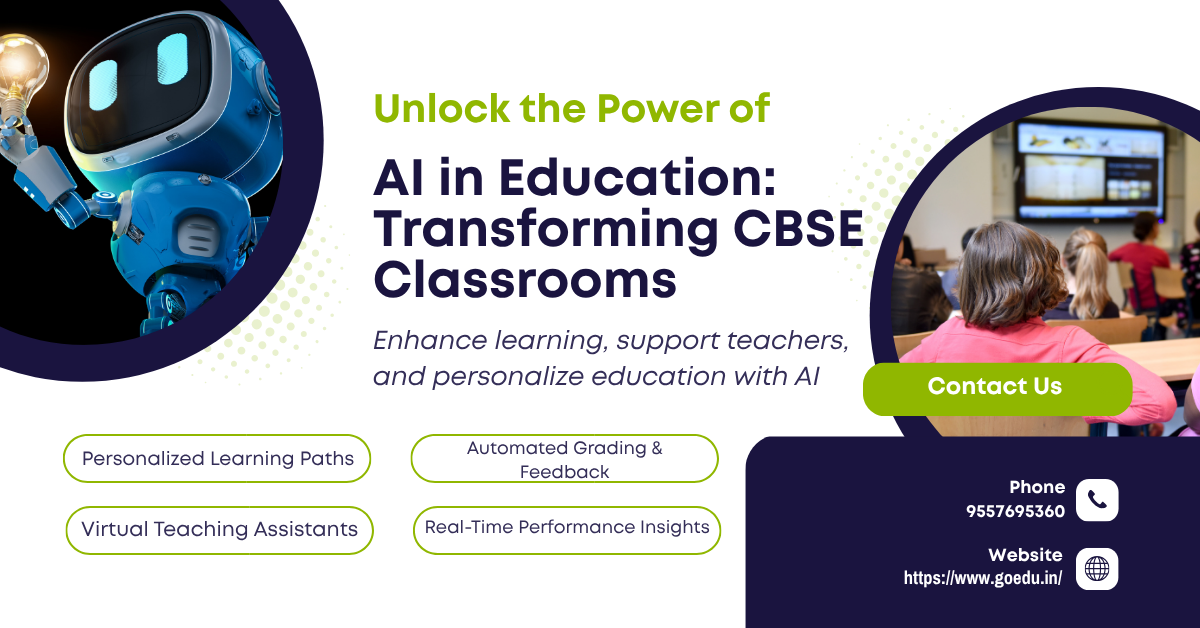
In today’s fast-evolving academic world, the benefits of AI in education are becoming hard to ignore — especially for progressive CBSE schools. From personalized learning paths to automated grading, AI is transforming how students learn and teachers teach. Whether you’re a school administrator, teacher, or parent, understanding these advantages is crucial for keeping up with the times.
Let’s explore how AI is reshaping education and why every CBSE school should start integrating it today.
Advantages of using AI in education:

1. Personalized Learning for Every Student
One of the most celebrated benefits of AI in education is its ability to deliver personalized learning experiences. Not every student learns the same way, and AI can help bridge that gap.
- AI-driven platforms assess each student’s performance and learning style.
- They recommend tailored lessons, exercises, and revision plans.
- Struggling in Math? The system will adjust by providing extra practice.
- Excelling in Science? The student gets advanced material to stay challenged.
CBSE schools can use AI tools like adaptive learning software to track student progress in real time. This allows teachers to offer more focused guidance, especially in large classrooms where one-on-one time is limited.
2. Smart Content Creation and Management
AI has made content creation smarter and more efficient. Educators no longer have to spend countless hours preparing lesson plans or searching for study material.
Here’s how AI supports smarter content:
- Generates digital textbooks tailored to CBSE curriculum
- Creates quizzes and practice papers based on student levels
- Offers visual simulations and gamified content for complex subjects
For example, AI can create an interactive biology module complete with diagrams, animations, and voiceovers — making tough topics much easier to understand.
3. Real-Time Feedback and Automated Grading
Every teacher dreams of saving time on repetitive tasks like checking assignments or grading tests. AI makes this possible through automated assessment systems.
With AI, CBSE schools can:
- Automatically grade objective-type questions like MCQs
- Provide instant feedback to students for faster learning
- Identify learning gaps and alert teachers
This doesn’t mean teachers will become obsolete. Instead, they’ll have more time to focus on mentorship, emotional support, and hands-on instruction — things AI can’t replace.
4. AI-Powered Virtual Classrooms and Assistants

The rise of virtual classrooms during the pandemic highlighted the importance of technology in education. Now, AI is taking it a step further with smarter, more interactive virtual learning environments.
Features like:
- AI chatbots that answer student queries 24/7
- Virtual teaching assistants to help during online classes
- Real-time translation and speech-to-text for inclusive learning
This is especially beneficial in CBSE schools where students come from diverse linguistic backgrounds. AI breaks down language and accessibility barriers, making quality education available to all.
5. Data-Driven Decisions and Predictive Analytics
AI thrives on data. In schools, this data can provide deep insights into student performance, classroom trends, and teaching effectiveness.
With AI-based analytics, CBSE schools can:
- Predict which students may need intervention before exams
- Identify the effectiveness of teaching strategies
- Analyze attendance patterns, behavior, and learning habits
For school management, this means more data-driven decisions — from modifying curriculum to enhancing classroom techniques.
Disadvantages of Using AI in Education

1. Overdependence on Technology
The growing integration of AI in classrooms can lead to an excessive reliance on technology by both teachers and students. This dependence may weaken essential soft skills—such as communication, problem-solving, and creativity—that are crucial for personal and professional growth.
2. Privacy Concerns
AI-driven learning platforms often collect and analyze large amounts of student data. Without strong data protection policies, this sensitive information could be misused, raising serious privacy and security issues.
3. Loss of Human Touch
While AI is effective at personalizing lessons, it also risks making education feel mechanical and less human. The emotional connection, empathy, and mentorship that teachers provide cannot be replicated by machines.
4. Decline in Memorization Skills
In the past, students had to memorize dates, authors, and historical events. With the rise of the internet, and now AI, information is instantly accessible. This convenience, while helpful, has reduced the habit of memorization, leading to what many call “collective forgetting.” AI may accelerate this trend further.
How to Use AI in Education Wisely

Experts emphasize that AI in education should be implemented strategically and ethically to maximize its benefits. Here are the key steps:
1. Train Educators First
Teachers need proper training to understand AI tools and apply them effectively in classrooms. Equipped with the right skills, they can adapt AI to suit different student needs while maintaining control of the learning process.
2. Strike the Right Balance
AI should enhance—not replace—traditional teaching. A balanced approach ensures that students benefit from both human guidance and technological efficiency.
3. Prioritize Ethics and Data Protection
Educational institutions must set strong ethical guidelines for AI usage. Protecting student data, ensuring transparency, and using AI responsibly are non-negotiable.
4. Continuously Review AI Practices
Since technology evolves rapidly, schools must regularly evaluate how AI is being used. This “constant revision” ensures AI continues to meet educational goals and supports long-term student development.
Why CBSE Schools Must Embrace AI Now
The Central Board of Secondary Education (CBSE) has already taken steps to include AI in its curriculum. But embracing AI isn’t just about teaching it — it’s about using AI to teach better.
By integrating AI tools, CBSE schools can:
- Stay aligned with NEP 2020’s vision of tech-integrated learning
- Improve student engagement and academic performance
- Equip students with future-ready skills
In short, schools that adopt AI now are giving their students a head start in tomorrow’s job market.
Conclusion
The benefits of AI in education are far too powerful to ignore. CBSE schools that start embracing this technology now will see stronger academic outcomes, more engaged students, and better learning experiences overall.
The future of learning is intelligent, data-driven, and tailored to each student’s needs — and AI is making that future a reality today.
Frequently Asked Questions (FAQs)
Q1. How is AI used in education today?
AI is used for personalized learning, automated grading, smart content creation, virtual classrooms, and predictive analytics in modern classrooms.
Q2. Is AI suitable for primary and secondary CBSE students?
Yes. AI can be adapted for all grade levels, offering age-appropriate content and interactive tools that make learning fun and effective.
Q3. Are CBSE schools already using AI?
Some forward-thinking CBSE schools have started integrating AI tools for teaching and learning. The CBSE curriculum also now includes AI as a subject.
Q4. Can AI replace teachers in the future?
No. AI supports and enhances teaching but cannot replace the empathy, creativity, and emotional support that human teachers provide.
Q5. What tools can CBSE schools use to adopt AI?
Schools can use platforms like Google Classroom with AI integrations, adaptive learning apps, AI-based testing tools, and chatbots.