

Why do some people thrive in social situations while others struggle to connect?
In our interconnected world, the ability to express yourself clearly and understand others is key– and it’s a skill that can be developed.
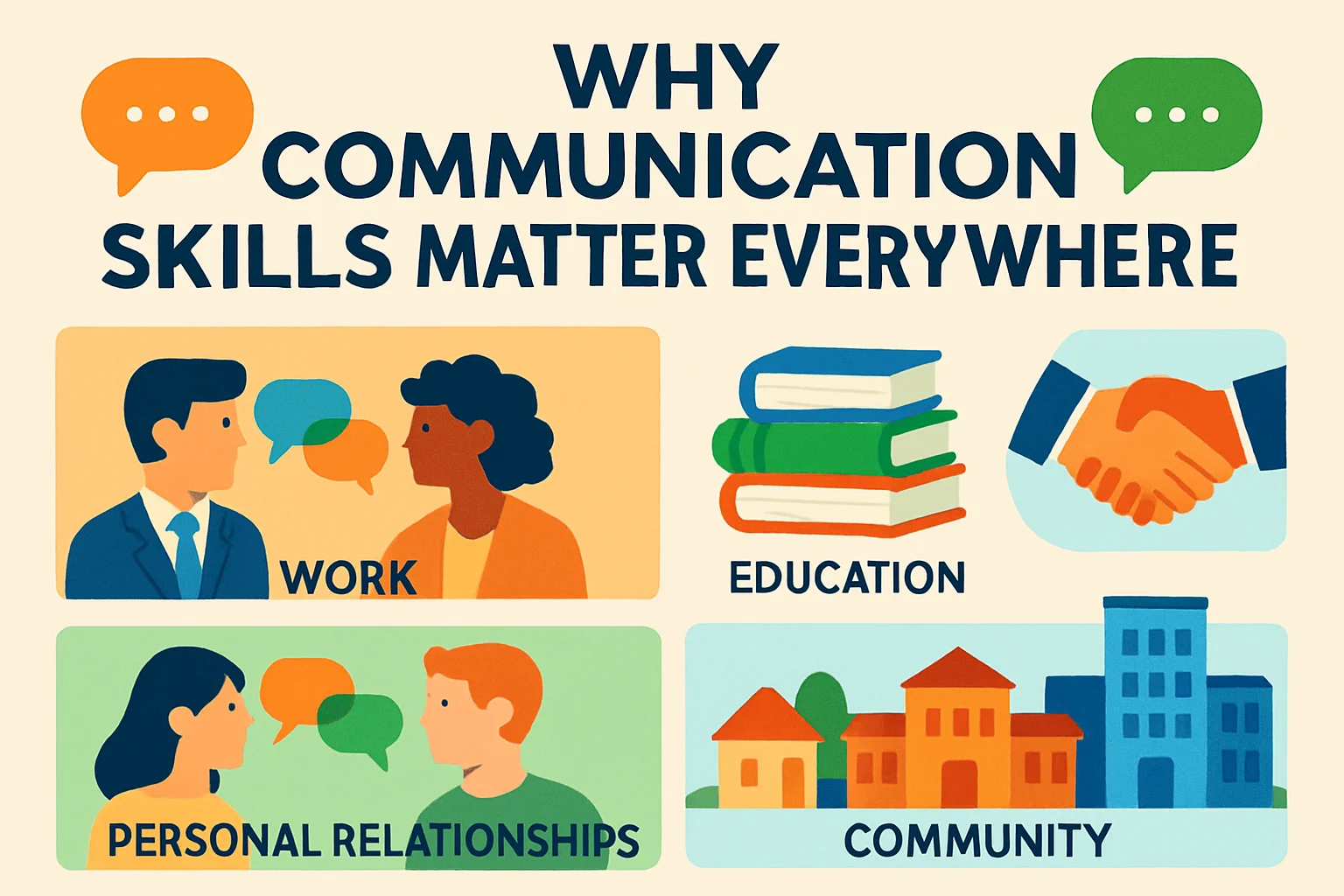
Good communication skills are like an invisible thread linking you to opportunities, relationships, and success.
Whether you’re a student thinking about your future, a parent helping your kids navigate school, or someone who just wants to have better conversations (and fewer awkward silences), working on how you communicate could improve all areas of your life.
The Foundation of Human Connection

Think about the best relationships you’ve had, whether at work or in your personal life. What made those connections feel so strong? While respect, trust, and shared values are important for any bond to thrive— there is one thing that must come first: the ability to communicate freely.
Research consistently shows that people who are good communicators not only enjoy their relationships more but also get further in their careers. A recent study found that 57 percent of employers see communication skills as the most important trait in job applicants.
Your Professional Passport to Success
Opening Doors Through Networking
In professional life, knowing how to build relationships is crucial– it can shape your career path.
Think of each interaction as planting a seed: when nurtured, these connections could lead to new job opportunities, collaborations, or ideas!
Excellent communicators don’t just stumble upon great introductions at networking events; they also know how to have conversations that matter and keep in touch with people over time.
They understand that networking isn’t about collecting business cards but building genuine relationships from which everyone involved can benefit.
Presentations That Make an Impact
In today’s world, irrespective of whether you’re suggesting a novel concept to your supervisor or conveying quarterly figures to investors, your skill in communicating information effectively is key to your influence.
Exceptional presenters do more than simply relay facts and figures; they tell stories that strike a chord with listeners and motivate them to act.
Some people presenting professionals organize their thoughts so that they flow logically as they speak– sometimes using visuals such as graphs or pictures– while also tailoring their style in order to connect with particular groups.
Teamwork That Drives Results
New research tells us that collaboration is absolutely vital for success in today’s workplace!
The best teams– those that get on well and communicate effectively– not only come up with better ideas but also complete their projects sooner.
When individuals can express thoughts clearly, provide constructive feedback, and resolve conflicts respectfully, everything runs more smoothly– and there are more innovations, too.
Indeed, studies show that teams whose members feel a strong sense of connection are 20 to 25 percent more productive than others: good interactions within a group can boost its output by a quarter.
Leadership Through Understanding
It is not always the case that gifted leaders are the most intelligent individuals in their teams. Rather, they have the ability to inspire and rally people around a common objective!
They don’t simply give orders— these exceptional leaders also listen attentively; by making sure everybody feels included and appreciated, they foster a sense of belonging in their group.
Academic Success and Beyond
Classroom Participation That Enhances Learning
Students who can share their ideas clearly and listen well sometimes understand topics better and get higher grades.
When participants in a discussion can both express themselves clearly and pick up on each other’s points, the group as a whole may learn more– and this can be measured through improved test scores.
Writing and Presentation Skills
Indeed, being skilled in your field is important, but how well you can communicate that knowledge frequently has an impact on how well you do at university.
Students who are able to organize their thoughts into a logical order– and then express themselves clearly in writing– not only enjoy higher marks for coursework and exams but also seem to have an edge over others with similar levels of understanding.
Preparing for Future Opportunities
If you are applying to college, looking for scholarships, or getting ready for your first job, being able to present yourself confidently can offer real benefits.
You look at interviews not as grilling sessions but as conversations; to prepare for them you practice talking about your experiences and what you would like to do.
Personal Relationships That Flourish
Building Meaningful Friendships
It’s very important to be yourself if you want a lasting friendship. You should be honest about your feelings and thoughts. Disagreements are normal, but they must be handled respectfully.
Studies show that those who get on well with others in their personal lives have stronger support networks– and are happier overall.
When people communicate effectively, they create bonds of understanding: this means there is an increased feeling of closeness as well as empathy (being able to put oneself in someone else’s shoes) and trust.
Family Bonds That Endure
Family dynamics are complex– we get that.
But don’t worry when people talk respectfully and honestly, they can work through generational gaps or arguments so the family unit stays strong despite moving house or changing jobs.
Families who share what’s on their minds and in their hearts usually cope better together when storms arise than those who keep things bottled up.
Navigating Conflicts Constructively
Every relationship hits a bump now and then– it’s the way we deal with these things that counts.
Conflicts don’t have to make us drift apart; in fact, they can sometimes help us grow closer. Good communicators are able to say exactly what they mean (without being rude), hear other people’s points of view, and come up with ideas or compromises that suit everyone involved.
Creating Positive Impact in Your Community
Building Bridges Across Differences
Nowadays, being able to communicate with others from different cultures and generations– or with unique worldviews/minds– is a hugely valued skill.
Finding common ground and promoting understanding between groups helps build kinder communities where everyone feels good about themselves– isn’t that great news?
Establishing Trust in All Interactions
Like building blocks, trust is crucial in both our personal lives and at work!
When we interact with others in a clear and honest way, we gain a reputation for being dependable– and this can lead to some great chances along with valuable connections.
Leading Positive Change
In case you speak for an issue or action for social betterment locally– your gift to describe a scenario whereby people were inspired enough to join hands had its utility!
Look at historical figures who made changes; a single thing united them. They were excellent communicators who excited others’ feelings through speech.
The Ripple Effect of Better Connection
When you improve your conversational habits, the advantages extend well beyond individual encounters. You develop greater self-assurance, form relationships of increased depth and quality, and uncover opportunities previously beyond your reach.
Others notice an upgrade in how you engage that sparks them to try too— creating good ripples among friends & colleagues alike! In an age when devices often get in the way of real human connection, folks who can relate genuinely have got something special going for them.
Making It Real in Your Daily Life
Here’s the good news: it’s never too late to start working on your communication skills.
Like any skill, being an effective communicator takes practice– as well as a willingness to explore new approaches to dialogue and interpersonal exchange. But the rewards? They are boundless!
So why not begin by becoming more aware of how you currently interact with the people around you? Notice when conversations go well (and when they don’t), as well as any patterns in your body language or tone of voice that could be improved upon.
Pay attention also to how well you listen: do you interrupt others mid-sentence? Do you finish their thoughts for them? Here’s another tip: Before engaging in important talks practice expressing your thoughts clearly in low-stakes situations.
Keep in mind though… good communication involves both talking AND listening! The best communicators are genuinely curious about others. When they speak with someone new, they ask thoughtful questions that encourage him/her to share more deeply!
And here’s why this matters so much: Because all human relationships—from friendship to business partnership— depend on one thing; being able to communicate your ideas effectively! Whether you are beginning your career, building a family, or hoping to make a difference in your community; one of the smartest things you can do for future success (and happiness) is work on connecting with people better.
Frequently Asked Questions
1. Why do some people find it easy to connect in social situations while others struggle?
Whether someone thrives or struggles in social situations is often ascribed to personality type– for example being introverted rather than extroverted– or traits such as shyness.
However, this does not mean that they cannot work on developing better communication skills: with practice anybody can learn how to make friends!
2. How can improving communication skills benefit my career?
Expressing your ideas clearly, listening well, and forming genuine connections at work can help you get ahead— sometimes even opening up new job opportunities.
Research shows when companies hire, they see communication skills as the number one thing they’re looking for: so make sure yours sets you up for success!
3. What are some practical ways to work on my communication skills?
- Think about how you communicate non-verbally and the tone of your voice.
- Practice conveying your ideas in everyday conversations, not just in stressful situations.
- Really listen to what others are saying try not to interrupt them.
- Ask questions that make it clear you want the other person to explain more fully.
- It’s amazing how much progress you can make– with reflection and a desire to learn– when you see talking skills as something you can improve on all the time.
4. Is it ever too late to develop good communication habits?
You can learn to be a better communicator no matter how old you are– there is always room for improvement!
It’s useful at any stage in life: whether you’re studying, working, or hoping to strengthen your relationships. Findings ways to express yourself more clearly and becoming aware of bad habits could lead not only to making more friends but also impressing employers enough that they promote you!