


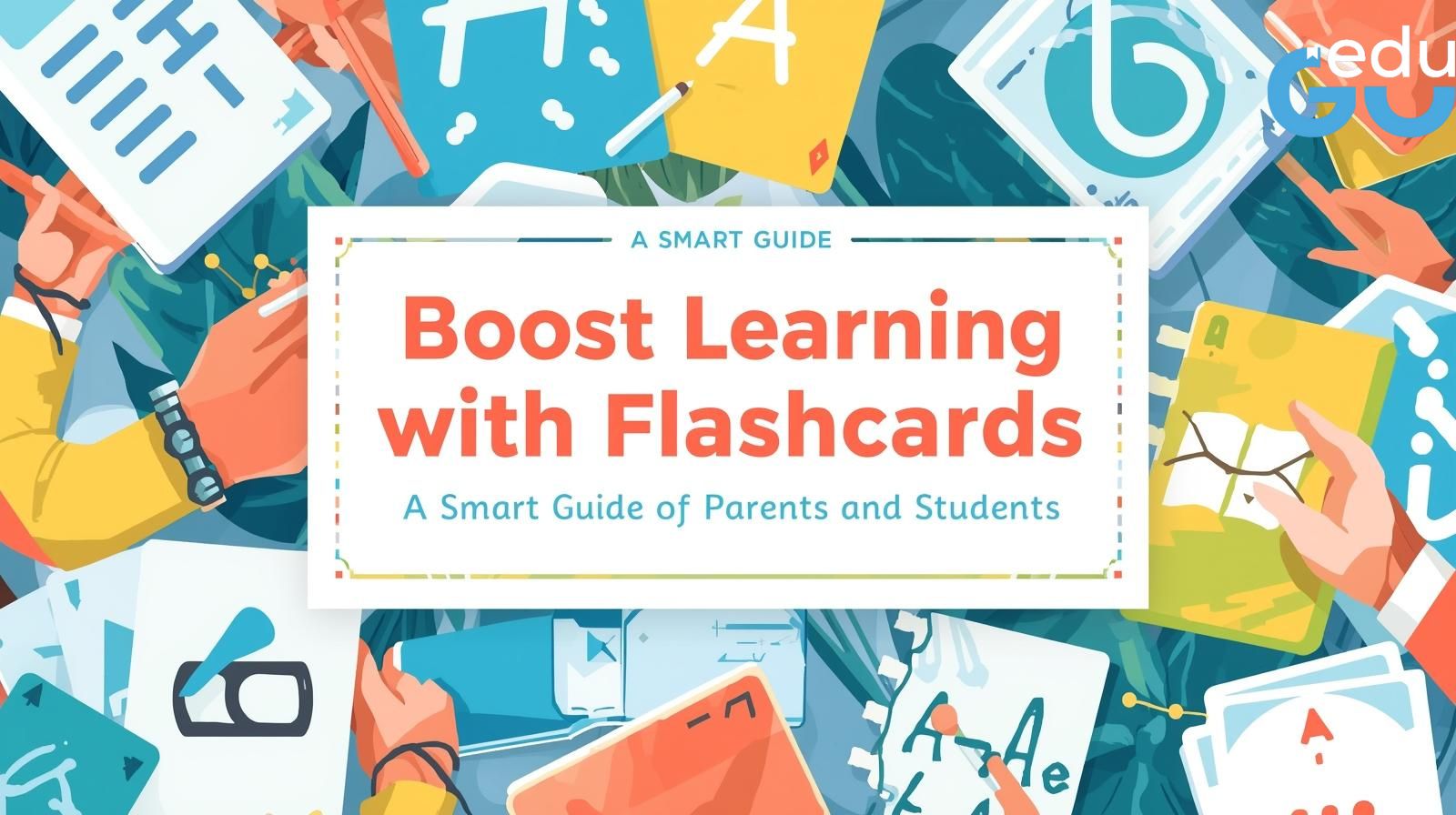
In today’s fast-paced world of education, students are always looking for effective ways to study. Parents, too, want strategies that save time while improving memory. One timeless method that continues to help learners of all ages is the use of flashcards. Whether it’s multiplication tables, vocabulary practice, or exam review, they make study sessions more interactive and engaging.
This guide explains what flashcards are, why they work, and practical ways parents and students can include them in learning at home or school.
What Are Flashcards?

these are small cards with a question or prompt on one side and the answer on the other. Despite their simplicity, they strengthen memory through active recall, a proven technique that supports long-term retention.
Types include:
-
Paper cards – traditional index cards or homemade versions
-
Digital cards – apps like Quizlet or Anki that support mobile study and spaced repetition
Why They Work

The effectiveness of flashcards comes from the testing effect—recalling information strengthens memory connections. Unlike passive reading, they encourage active engagement, leading to better understanding and stronger recall.
Benefits for Students
-
Improve recall of facts, formulas, and vocabulary
-
Build confidence through regular practice
-
Easy to carry and use anywhere
Benefits for Parents
-
Make study sessions more fun and interactive
-
Can be tailored to a child’s needs
-
Encourage active participation instead of passive learning
How to Use Effectively

-
Keep it simple – One concept per card
-
Add visuals – Images and colors help, especially for young learners
-
Use spaced repetition – Review cards at intervals to boost retention
-
Mix old and new – Reinforce by rotating both
-
Practice both sides – Recall answers and questions for deeper learning
Creative Ideas
-
Vocabulary: word on one side, meaning with example on the other
-
Math: problem on one side, solution on the other
-
Science: diagrams, terms, or processes
-
Language: grammar rules, idioms, or translations
-
Family quiz nights: turn studying into a game
Common Mistakes to Avoid
-
Overloading cards with too much information
-
Skipping regular reviews
-
Using them only for memorization without context
-
Avoiding difficult cards and focusing only on easy ones
FAQs About Flashcards
1. Are flashcards only for children?
No. Flashcards benefit all ages—from preschoolers to college students.
2. Paper or digital—what’s better?
Both are effective. Paper flashcards are tactile, while apps make studying portable.
3. How often should flashcards be reviewed?
Short daily sessions (10–15 minutes) are most effective.
4. Do flashcards help in exams?
Yes. Flashcards for exam preparation improve recall and confidence.
5. Are flashcards enough for all subjects?
They’re excellent for memorization but should be paired with practice and problem-solving.
Takeaways
these cards may look simple, but they’re highly effective study aids. They improve memory, sharpen focus, and make learning enjoyable. For parents, they’re a practical, low-cost way to support a child’s education.
Whether you prefer paper cards or digital apps, consistency is what matters most. Adding them into daily study routines can transform the way students learn and remember information.