

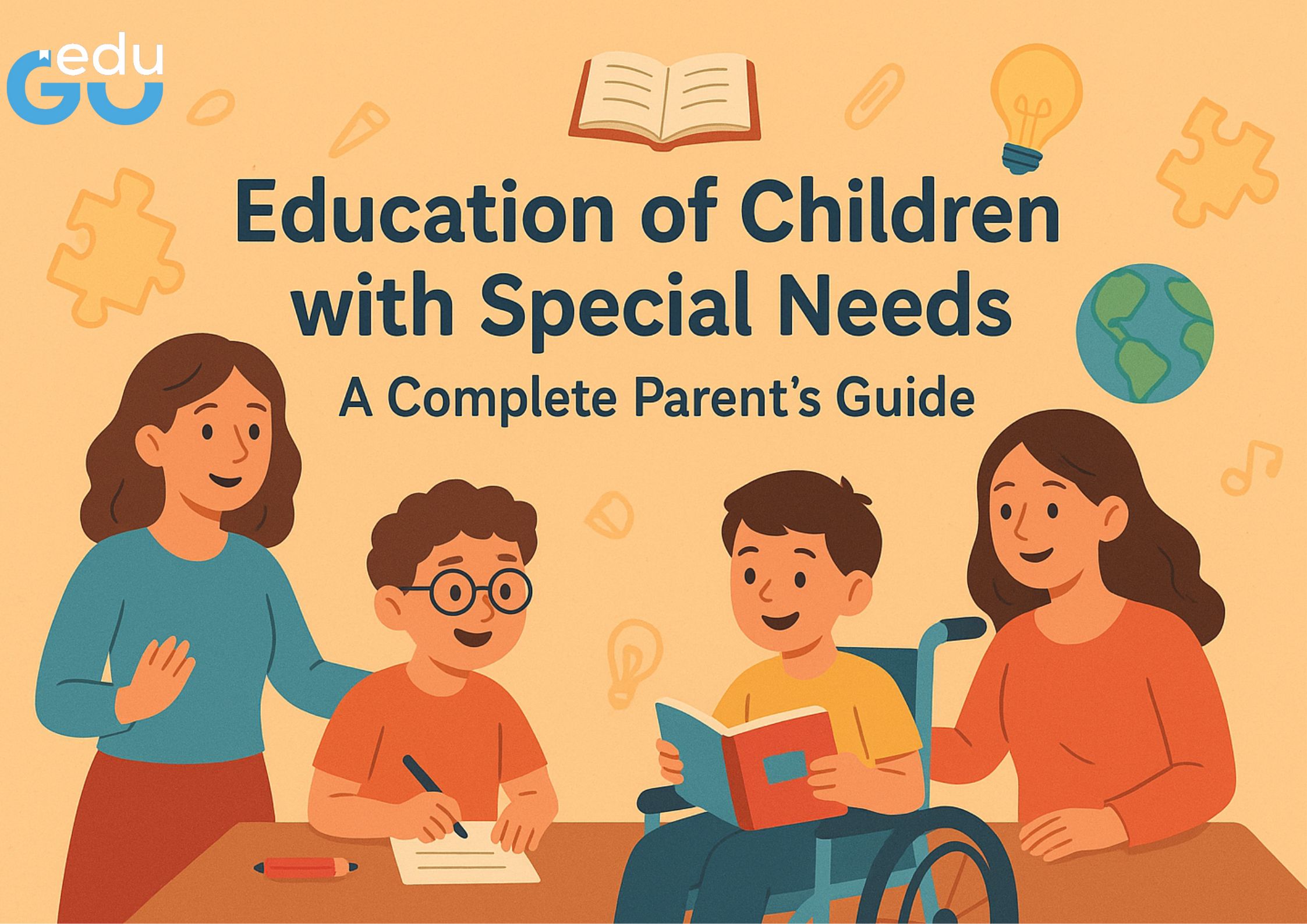
All children have the right to learn, develop, and thrive. Yet the education of children with special needs demands a special touch—one that blends patience, innovation, and specially developed teaching methods. Parents and students too may struggle to fit into the standard classroom, particularly when learning disabilities such as ADHD, autism spectrum disorder, dyslexia, or developmental delays come into play.
This handbook aims to assist parents and students in understanding the significance of inclusive education, finding practical teaching strategies, and accessing resources that make the journey easier.
Why Children’s Special Needs Education Is Important

Education is not just about schoolwork—it develops independence, socialization, and self-confidence. For children with special needs, education offers a level playing field to excel in everyday life. Yet, conventional systems often fail to consider their unique needs.
Common challenges include:
-
Struggling with concentration and memory
-
Difficulty processing abstract ideas
-
Social or communication issues
-
Knowledge gaps in foundational skills
Despite these challenges, when schools, parents, and communities work together, children can thrive academically and emotionally.
Key Strategies for Successful Education
1. Individualized Learning Plans
Each child learns differently. Schools often use Individualized Education Programs (IEPs) to establish specific, achievable goals. Parents can collaborate with teachers to ensure the plan reflects their child’s strengths and needs.
2. Multi-Sensory Teaching Approaches
Children learn best when lessons integrate sight, sound, and touch. Examples include:
-
Using visual aids in reading and math
-
Incorporating music, movement, or storytelling into lessons
-
Encouraging children to build or sketch ideas for better retention
3. Establishing a Supportive Environment
Learning is most effective in calm, organized spaces. Parents and teachers can:
-
Minimize distractions in study areas
-
Create predictable routines
-
Provide clear and simple instructions
4. Technology and Assistive Tools
Technology has transformed the education of children with special needs. Helpful tools include:
-
Speech-to-text software
-
Interactive learning apps
-
Large-print books and audiobooks
-
Calculators and abacuses
These tools assist learning and also foster independence.
5. Encouragement and Positive Reinforcement
Small victories deserve recognition. Whether it’s solving a math problem or completing a reading task, celebrating progress builds confidence and motivates children to keep learning.
Role of Parents in Education

Parents play a central role in their child’s success. They can:
-
Stay involved by communicating regularly with teachers
-
Reinforce lessons at home through cooking, shopping, or games
-
Be patient and allow progress at a natural pace
-
Encourage self-expression to build confidence and communication skills
When parents create a positive learning environment, children feel supported and valued.
Role of Teachers and Schools
Schools also play a key role in inclusive education. Teachers can:
-
Apply differentiated teaching methods
-
Allow extra time during tests
-
Include peer-learning activities
-
Provide emotional support alongside academics
Strong collaboration between schools and families ensures meaningful progress in the education of children with special needs.
Helpful Parent and Student Resources

Parents don’t have to take this journey alone. Useful resources include:
-
Understood.org – Guidance for parents of children with learning differences
-
Local support groups and counseling centers
-
Special education apps
-
National and state programs offering training and assistance
These provide both strategies and a supportive community for families.
FAQs Regarding the Education of Children with Special Needs
Q1. What is “education of children with special needs”?
It is adapting teaching methods, tools, and environments to meet the unique needs of children with physical, emotional, or learning disabilities.
Q2. Can children with special needs go to regular schools?
Yes. Inclusive education policies allow children to attend mainstream schools with accommodations such as IEPs and trained teachers.
Q3. How can parents help their child learn more at home?
Parents can integrate learning into daily routines, follow structured schedules, and use games or creative activities to make learning fun.
Q4. What role does technology play in special education?
Technology provides adaptive tools like speech recognition software, audiobooks, and educational apps, making learning accessible and engaging.
Q5. How can teachers support children with special needs in classrooms?
Teachers can simplify instructions, offer flexible assessments, encourage group learning, and provide emotional support to ensure inclusion.
Takeaway
The education of children with special needs is about recognizing strengths, addressing challenges, and creating opportunities for success. With supportive parents, dedicated teachers, and the right resources, every child can achieve their potential.
Inclusive education does more than empower children—it helps build a society where every learner is valued and given a chance to shine.