


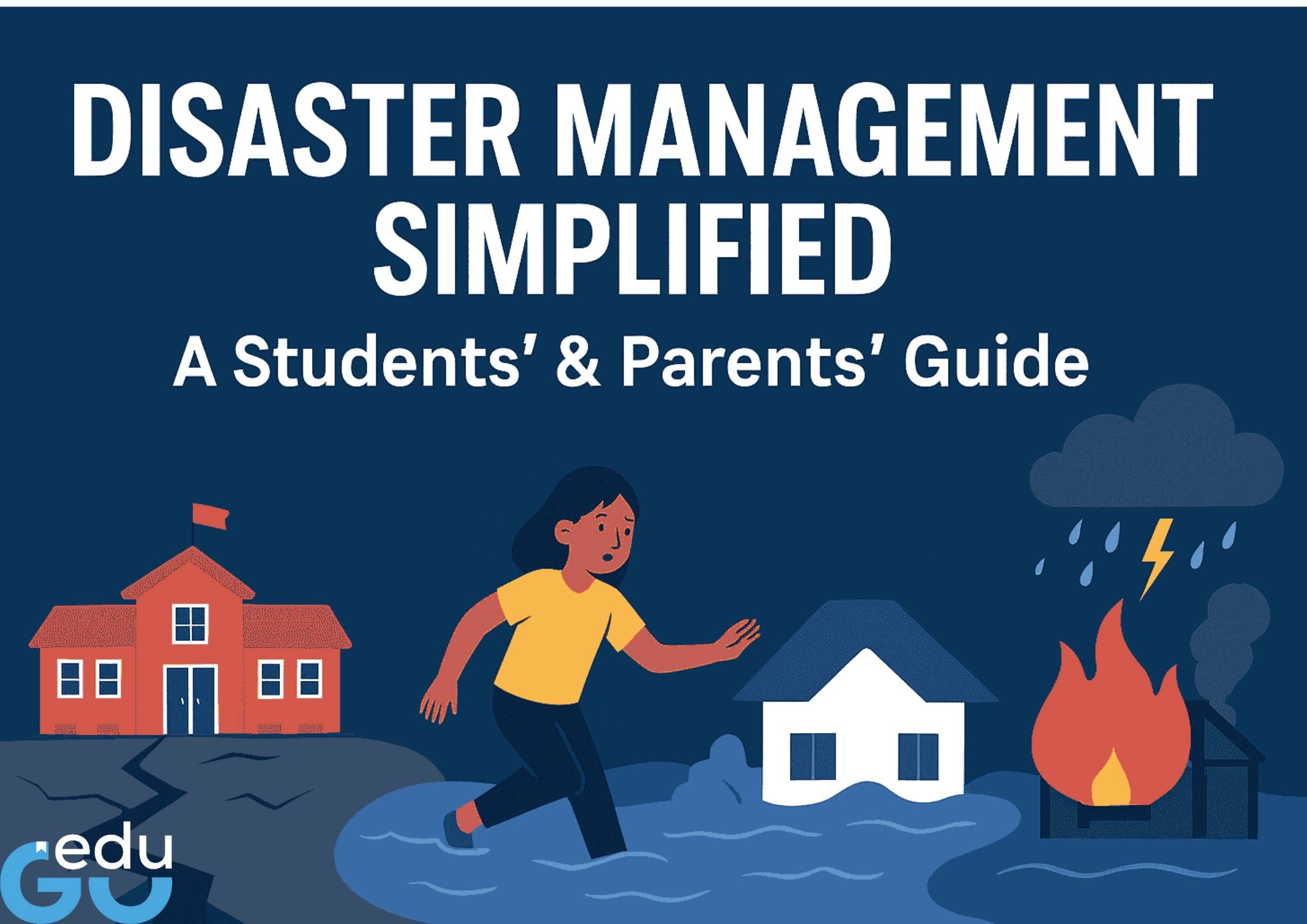
Suppose there was an earthquake when school was in session, or a flood alert in your city. How do we make children safe and calm when such incidents happen? That’s where disaster management comes in. Disasters, both natural (like cyclones and earthquakes) and man-made (like accidents or fires), can strike at any moment, at any place.
For families and educators, disaster management isn’t just a subject—it’s a life skill that minimizes risks, reduces fear, and ensures safety. In this guide, we’ll explain the basics of disaster management in student-friendly language, share practical tips for parents, and highlight why awareness from an early age is essential.
What is Disaster Management?

-
Preparedness – Pre-disaster actions. Example: school safety drills, stocking a home emergency kit.
-
Response – Immediate actions during a disaster. Example: evacuating quickly when a fire alarm sounds.
-
Recovery – Post-disaster activities to normalize life. Example: trauma counseling, rebuilding schools.
-
Mitigation – Measures to reduce long-term impact. Example: earthquake-resistant building codes.
The UNICEF Emergency Preparedness framework emphasizes that preparedness and mitigation are as important as immediate response. For students, knowing these steps means they won’t be caught by surprise.
Why Disaster Management Matters for Students and Parents
Disasters often trigger panic because people don’t know how to react. By teaching disaster management early, students:
-
Learn responsibility – Understanding how to protect themselves and help peers.
-
Gain confidence – Safety drills reduce fear during emergencies.
-
Remain safe – Skills like first aid or evacuation can be life-saving.
For parents, disaster management provides peace of mind knowing kids gain practical survival skills beyond textbooks. According to the National Disaster Management Authority of India (NDMA), family preparedness and awareness are the most effective tools to reduce disaster risks.
Students’ Disaster Management Tips

1. In School
-
Know the nearest exit and evacuation routes.
-
Participate actively in safety drills.
-
Remember “Drop, Cover, and Hold” during earthquakes.
-
Stay calm and follow teachers’ instructions.
2. At Home
-
Help parents prepare an emergency kit (water, dry food, flashlight, medicines, documents).
-
Decide on a family meeting point if separated.
-
Memorize emergency numbers (police, fire, ambulance).
3. Stay Aware
-
Keep track of daily news and weather updates.
-
Learn the difference: Watch = conditions favorable; Warning = take action immediately.
Parents’ Role in Disaster Management
Parents guide children to stay safe during unpredictable events. Here’s how:
-
Create a Family Safety Plan – Assign roles for each family member.
-
Discuss Calmly – Frame preparedness as a skill, not fear.
-
Coordinate with Schools – Stay informed on school safety drills and policies.
-
Practice Together – Home mock drills make children confident and ready.
The NDMA highlights that family planning and community participation are vital in reducing disaster risks, as communities are often the first responders before external help arrives.
Schools’ Role in Disaster Preparedness
Schools are safe spaces, but preparedness ensures they stay that way. Many schools in India and abroad include:
-
Regular fire and earthquake drills
-
Disaster Management Committees for staff and students
-
Evacuation maps and posters placed around campus
-
First-aid training for teachers and students
Resources like Ready.gov’s Kids & Families section stress the importance of drills, family communication plans, and student participation in creating safe learning environments. This involvement ensures children grow into responsible, resilient citizens.
Common Types of Disasters Students Should Know
-
Natural Disasters – Earthquakes, floods, cyclones, landslides, pandemics.
-
Man-made Disasters – Fires, building collapses, chemical leaks, transport accidents.
Awareness of both helps children recognize risks in their environment.
FAQs on Disaster Management
1. Why must students study disaster management?
Because they spend much of their day at school or away from parents. Knowing how to react in an emergency keeps them and others safe.
2. What can children do to help?
Join drills, listen to safety instructions, spread awareness among friends, and share learnings with family.
3. How can parents prepare kids without scaring them?
Present it as “safety training.” Keep discussions positive, highlight teamwork, and make drills engaging.
key Takeaways
Disasters are unpredictable, but readiness is within our control. With disaster management skills, students can remain calm, protect themselves, and help others. Parents contribute by guiding children, and schools by organizing safety programs.
Together—students, parents, and teachers—we can build safer communities where children are not just prepared for emergencies but empowered for life.